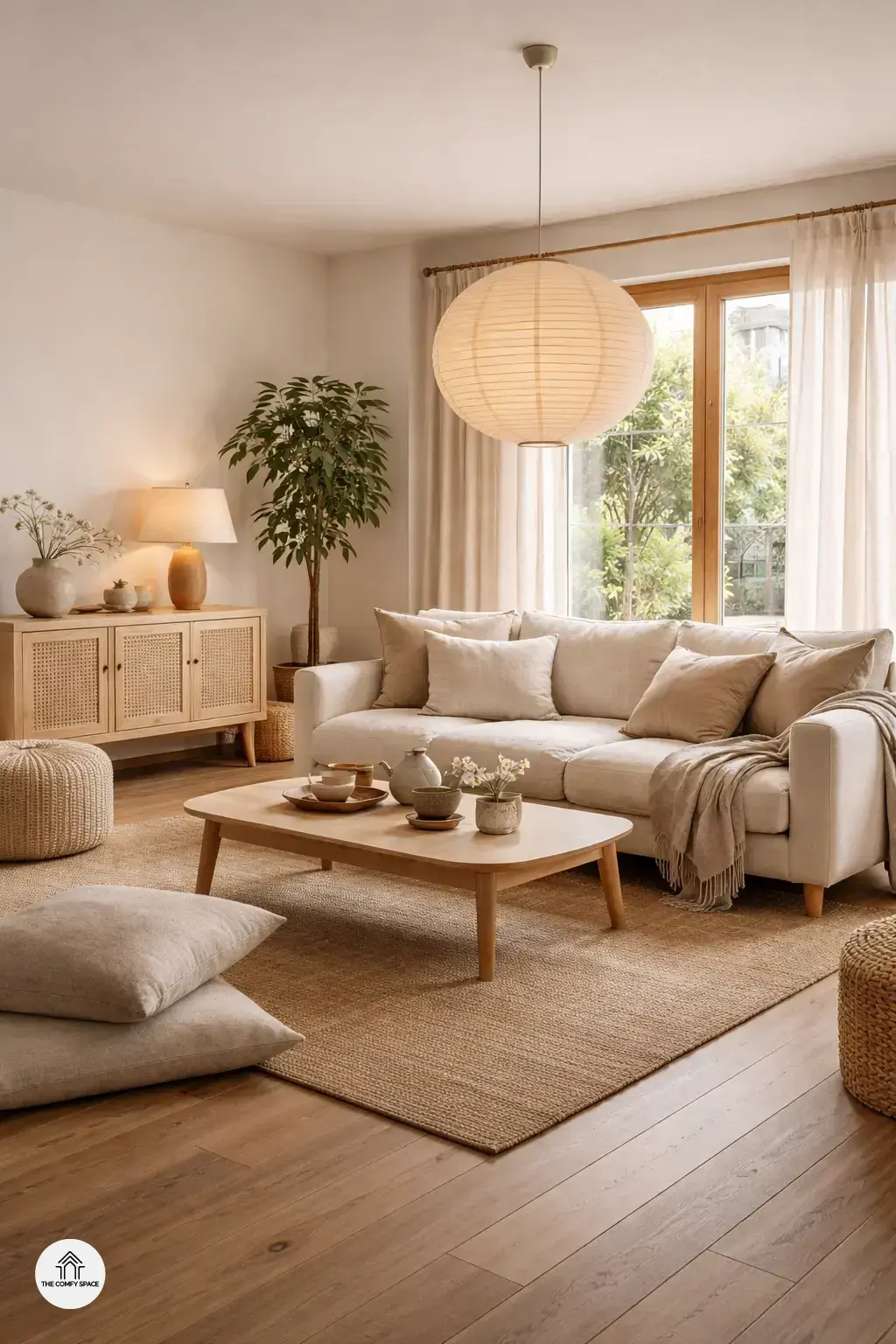
Imagine walking into a room where sleek Japanese minimalism dances effortlessly with warm Scandinavian coziness. That’s Japandi style for you! It’s a design blend that champions clean lines, natural materials, and a vibe that’s inviting rather than stark. If you’ve ever tried decluttering only to realize your space feels like a cold museum exhibit, Japandi gently fixes that with its “less is more but comfy too” philosophy.
Here’s a tip from a designer who’s been there: start with simple wooden furniture and soft textiles, then add tiny pops of color with a few well-chosen plants or ceramics. “Japandi perfectly balances function and feeling,” interior expert Maya Lin says. Trust me, embracing this style means saying goodbye to empty rooms and hello to spaces that breathe and hug you back.
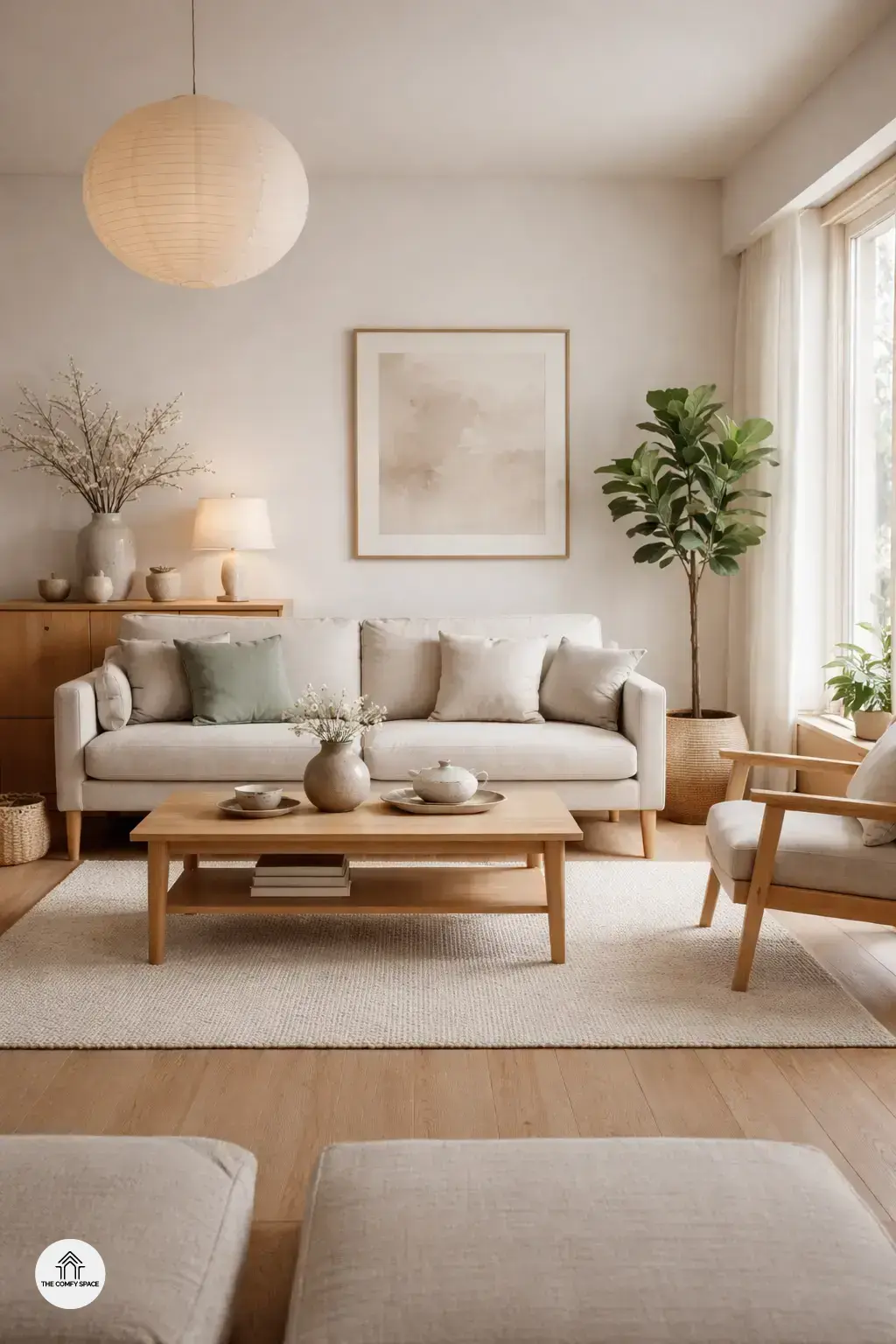
The Heart of Japandi: Neutral Tones and Natural Textures
Japandi style is all about embracing soft earthy colors like beige, cream, and muted greens. These colors don’t just look pretty; they create a calming backdrop that makes your space feel like a gentle hug after a long day. When I first tried to match these tones, I accidentally ended up with a room that felt more ‘boring office’ than ‘cozy retreat.’ Lesson learned: mixing too many shades can overwhelm the minimalist vibe Japandi aims for.
Adding wood and bamboo textures brings a natural warmth that breaks the monotony. Think smooth wooden furniture or a bamboo lamp. Linen and cotton fabrics are the cherry on top—they add softness without clutter. As interior designer Mia Tanaka says,
“Japandi is where minimalism doesn’t mean cold; it means cozy and balanced.”
My advice? Visit your local home goods store multiple times to find those perfect fabrics—it’s worth the effort, trust me!
Furniture Finds: Simple, Functional, and Comfortable
When it comes to Japandi style, furniture plays a starring role in blending simplicity and comfort seamlessly. Low-profile wooden furniture inspired by Japanese design instantly brings a calm, grounded vibe to any space. Think clean lines and natural textures—nothing too flashy or overly ornate. Pair these with Scandinavian-inspired chairs that boast both functionality and cozy throws, and you’ve got a room that feels inviting yet effortlessly stylish. My own journey was a bit of trial and error—I once bought a bulky wooden table from my usual store that just screamed clutter, not calm.
To avoid that chaos, smart storage is your best friend. Incorporating minimalistic shelves or hidden compartments helps keep things tidy without sacrificing beauty. As a famous designer once said,
“Simplicity is the ultimate sophistication.”
It’s true—choosing multifunctional pieces allows you to maintain that delicate balance between form and function, a Japandi hallmark. Trust me, your living room will thank you for it (and so will your sanity!).
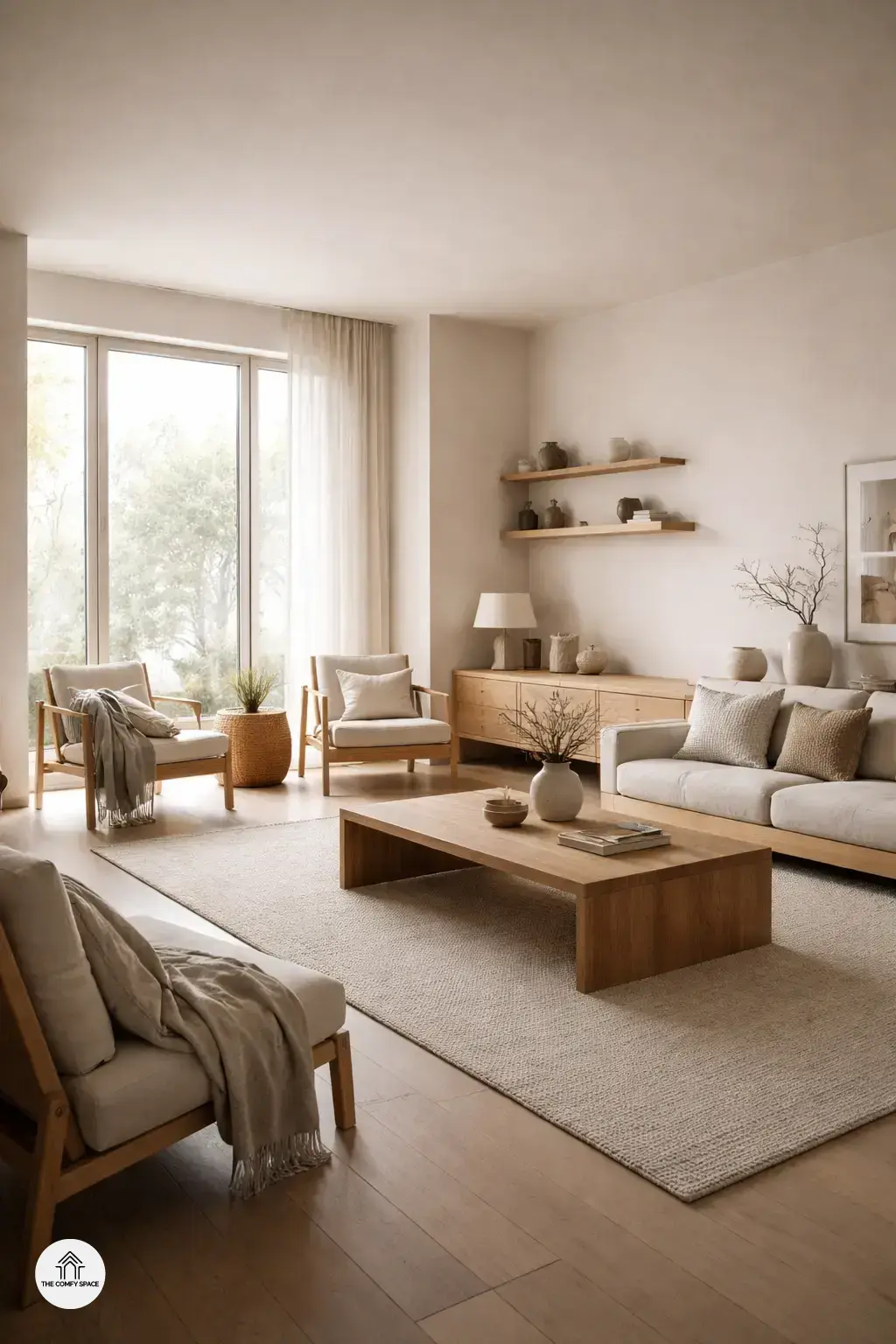
Mixing Minimalism and Comfort in Your Lighting Choices
Lighting in Japandi style is all about that soft glow that whispers relaxation rather than shouting for attention. Soft, diffused lighting sets a cozy mood that invites you to kick back after a long day. I remember once going overboard with stark, bright lights—let’s just say it felt more like a dentist’s office than a chill living room! Trust me, swapping those harsh bulbs for warm-toned, diffused lamps changed the vibe completely.
To keep things natural and airy, maximize your space’s daylight with sheer curtains that gently filter the sun. Simple yet elegant pendant or floor lamps play a big role too—they don’t just light up the room; they act as subtle style statements. “Good lighting can transform a space without overwhelming it,” an interior designer I admire often says. So, think ‘understated charm,’ not ‘spotlight on everything!’
Mistakes to Avoid and Lessons Learned from my Japandi Journey
Embarking on my Japandi journey, I quickly learned that trying to make it too sparse led to a cold feeling in my living room. It was like walking into a stylish showroom, but not a home. Finding that sweet spot between minimalism and warmth wasn’t easy. I realized that layering cozy textures was key, as interior designer Jane Smith wisely says,
“Minimalism isn’t about less, it’s about more of what matters.”
Another hiccup was choosing materials that weren’t quite natural, which completely ruined the vibe. I used synthetic rugs once—big mistake! Real wood, linen, and bamboo create that authentic Japandi ambiance. Learning to balance minimalism with cozy accessories, like soft cushions and subtle lighting, truly saved the day. If you’re struggling, remember: it’s not about perfection but comfort and simplicity, making your space uniquely yours.