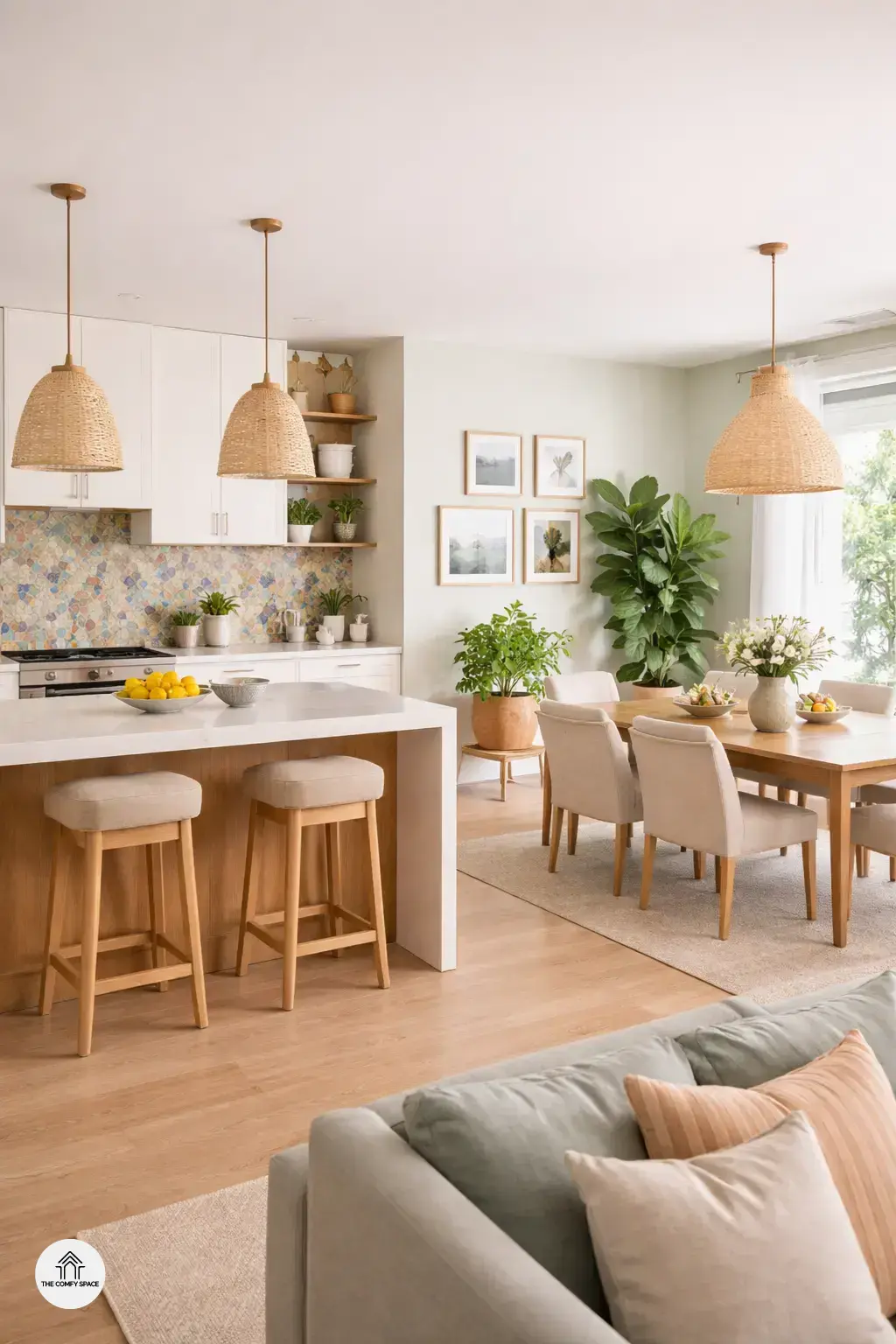
Open-plan kitchens can feel overwhelming when everything is in one big space—cooking, dining, and chilling all mixed together. It’s easy to feel like you’re juggling a million things at once. Defining zones helps create order by carving out specific areas meant for different activities. This division doesn’t mean walls; instead, think of it as setting the stage for a smooth flow.
Zones improve cooking, dining, and relaxing flow by making the space more functional and inviting. ‘Separating spaces subtly is key to making an open-plan kitchen work,’ design expert Jamie Lee says. Simple decor choices like rugs or lighting can signal boundaries, helping you move from chopping veggies to enjoying a meal without tripping over the chaos—real-life proof that a little planning saves a lot of headaches!
Use Rugs to Separate Kitchen and Living Areas
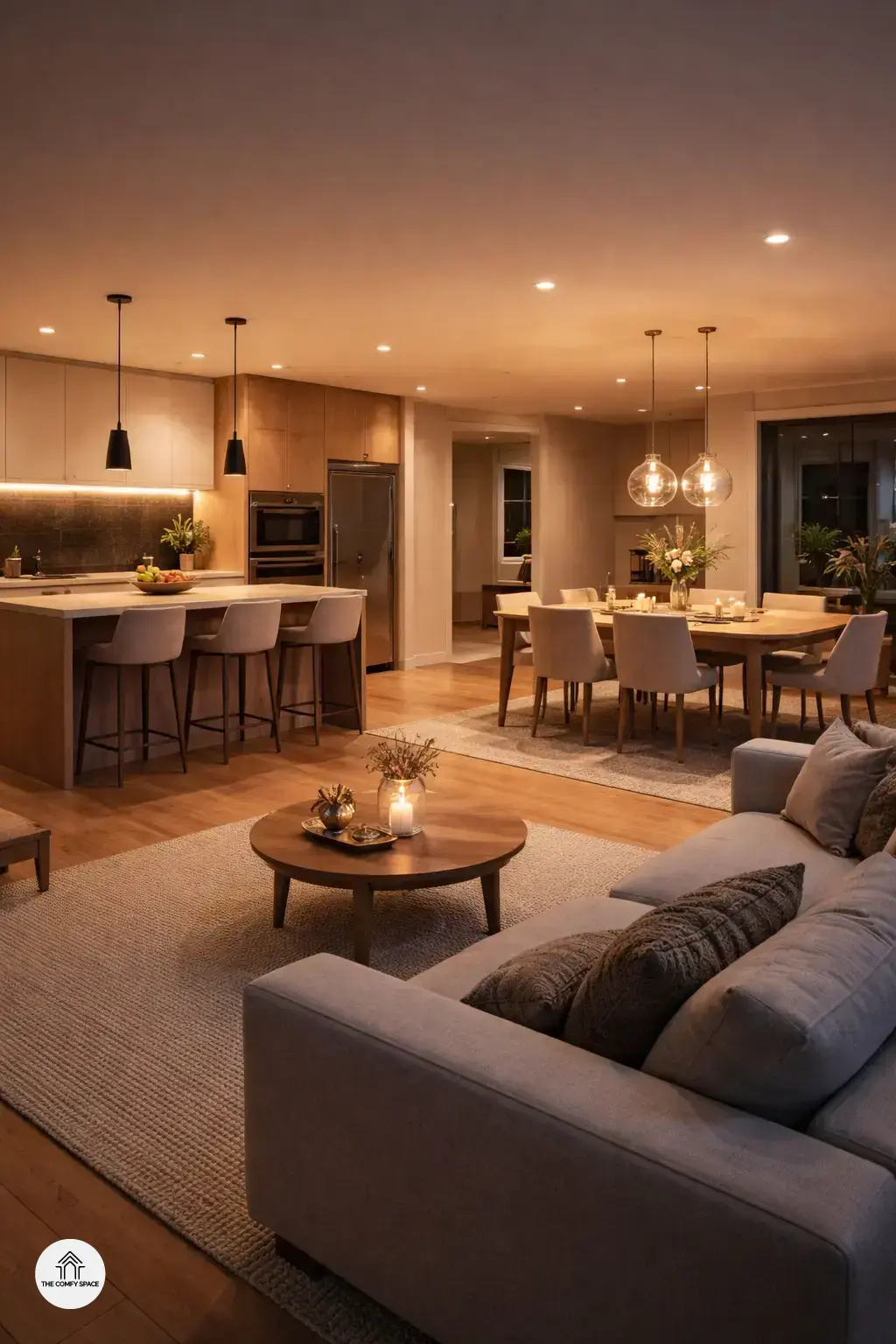
Rugs are a fantastic way to carve out distinct zones in an open-plan kitchen without adding walls. They bring warmth and softness underfoot, making your kitchen and living areas feel more inviting. Choosing durable, washable rugs is a must, especially around food prep zones. After all, spills happen to the best of us, right? “A good rug should stand up to life’s little messes and still look great,” interior designer Emma Larson says.
Place rugs thoughtfully—under dining tables or seating areas—to anchor those spaces visually. Don’t be afraid to mix colors and textures; it adds depth and interest, helping your brain switch gears from ‘kitchen mode’ to ‘relaxation mode.’ It’s not just practical; it’s a style win, making your home that much cozier and more dynamic.
Lighting Tricks to Highlight Different Zones
Lighting can be your secret weapon when it comes to defining zones in an open-plan kitchen. Installing pendant lights over the island or dining spots not only sets a handy task light but also creates a cozy, focused area. It’s like giving your kitchen spots little hats saying, ‘Hey, this is where the magic happens!’
For cooking areas, recessed lighting is a lifesaver—no shadows, just crisp, clear light. And don’t forget those lounging corners! Adding floor lamps or wall sconces can turn a simple seat into a welcoming nook perfect for sipping coffee or catching up on a book. As interior designer Jane Smith says,
“Layer your lighting thoughtfully to guide the flow without breaking the open feel.”
Furniture Placement That Creates Natural Divisions
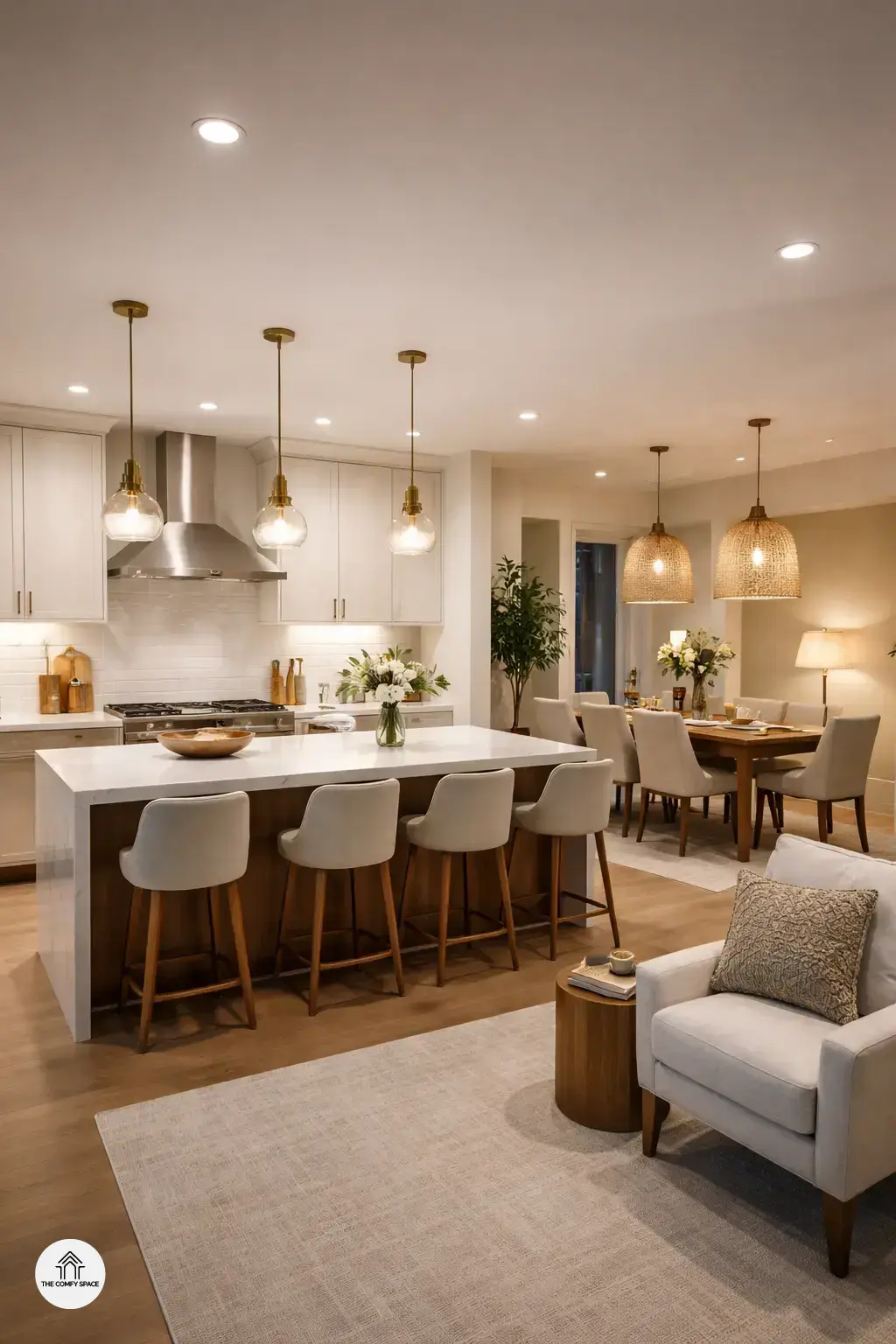
When it comes to furniture placement in open-plan kitchens, creating natural divisions can be a game-changer. Position kitchen islands as boundaries to establish clear zones—this not only defines cooking space but also offers extra seating or prep area. “A well-placed island acts like an unspoken boundary that guides the flow,” interior designer Emma Clark says. Placing sofas back-to-back with kitchen counters is another clever trick, subtly separating living and cooking areas while encouraging cozy interaction.
Open shelving units work wonders as separators, letting you display your favorite décor or cookbooks while keeping spaces airy. It’s a common struggle to avoid placing bulky furniture that blocks light, but open shelves solve that perfectly. Remember, the goal is to create zones, not walls, so your space feels connected yet organized—a balance that’s easier said than done, but totally achievable with thoughtful placement!
Decor and Color Schemes for Visual Separation
When it comes to open-plan kitchens, using decor and color schemes strategically can work wonders in defining distinct zones. One simple yet effective trick is to use contrasting wall colors or backsplash tiles. Imagine cooking against a vibrant tile backdrop while your dining area rests in a soothing pastel shade. This subtle difference can create a natural boundary without physical barriers. As designer Anna Reed says,
“Color is your invisible room divider. It separates spaces without closing them off.”
Adding plants and artwork is another easy way to carve out separate zones. A tall plant or a gallery wall can visually anchor different areas without clutter. Also, don’t underestimate the power of texture! Mixing smooth surfaces in the kitchen with cozy fabrics or rougher materials in the seating area keeps things interesting and clearly marked. After a few trial-and-error shopping trips—trust me, I once bought too many shiny metal accents—it’s about balancing styles that speak your personality while clearly defining each space’s vibe.