
A small guest space should earn its keep. In my first tiny apartment, I tried to make a “fancy” spare room, and it became a box of random stuff from IKEA and Target. Not cute. The better move is a flexible setup with a sleeper chair, a fold-down desk, and hidden storage, so the room can switch roles fast. “Good design should make a room work harder, not feel busier,” interior designer Dana Lee says.
For small homes, that kind of flexibility is gold. Use soft bedding, a lamp with warm light, and a basket for guest extras so the room still feels welcoming, not like a storage closet wearing perfume. A slim wall shelf or ottoman can hold books, chargers, and daily clutter without stealing space. That way, the room looks calm, feels cozy, and handles real life with a little less chaos.
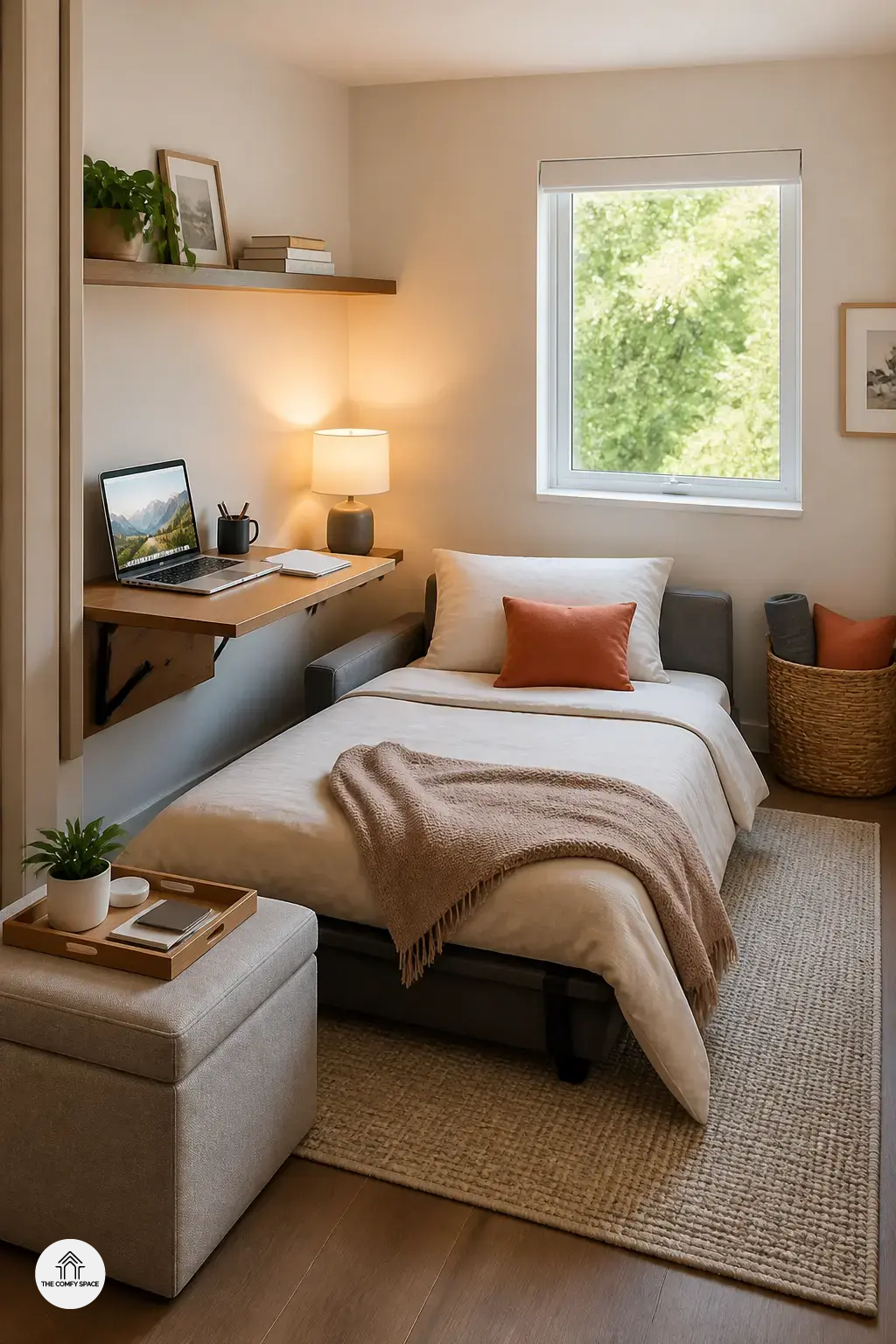
Start with the Right Layout for Real Life
Start with the layout, because that’s where small guest rooms either feel calm or turn into a tiny obstacle course. I once made the classic mistake of squeezing in a bulky chair and a giant side table from a big-box store, and suddenly the room had all the charm of a storage closet. Keep the path open, and let every piece earn its place. As designer Sarah Collins says, “Good layout makes a small room feel generous.”
- Choose furniture placement that keeps the room open and easy to move through.
- Think about how the room works when guests are not there.
- Avoid buying too much furniture that blocks the flow.
Choose Furniture That Works Double Duty
Choosing furniture that works double duty is one of those small-home wins that feels like magic. I once bought a cute guest chair that looked amazing, but it could barely hold a throw pillow, let alone a real visitor. Lesson learned. For a guest space, think smart first: sofa beds, daybeds, and fold-out options can turn one room into two jobs without making it feel crowded.
Look for pieces that hide storage too. Ottomans, storage benches, and nesting tables are lifesavers when you’re trying to stash blankets, books, or that extra lamp you swore you would use someday.
“A good guest room should flex with your life, not fight it,” says interior designer Maya Reed.
When shopping at IKEA, Target, or a local furniture shop, test hinges, cushions, and dimensions carefully. A little measuring now saves a lot of awkward moving later.
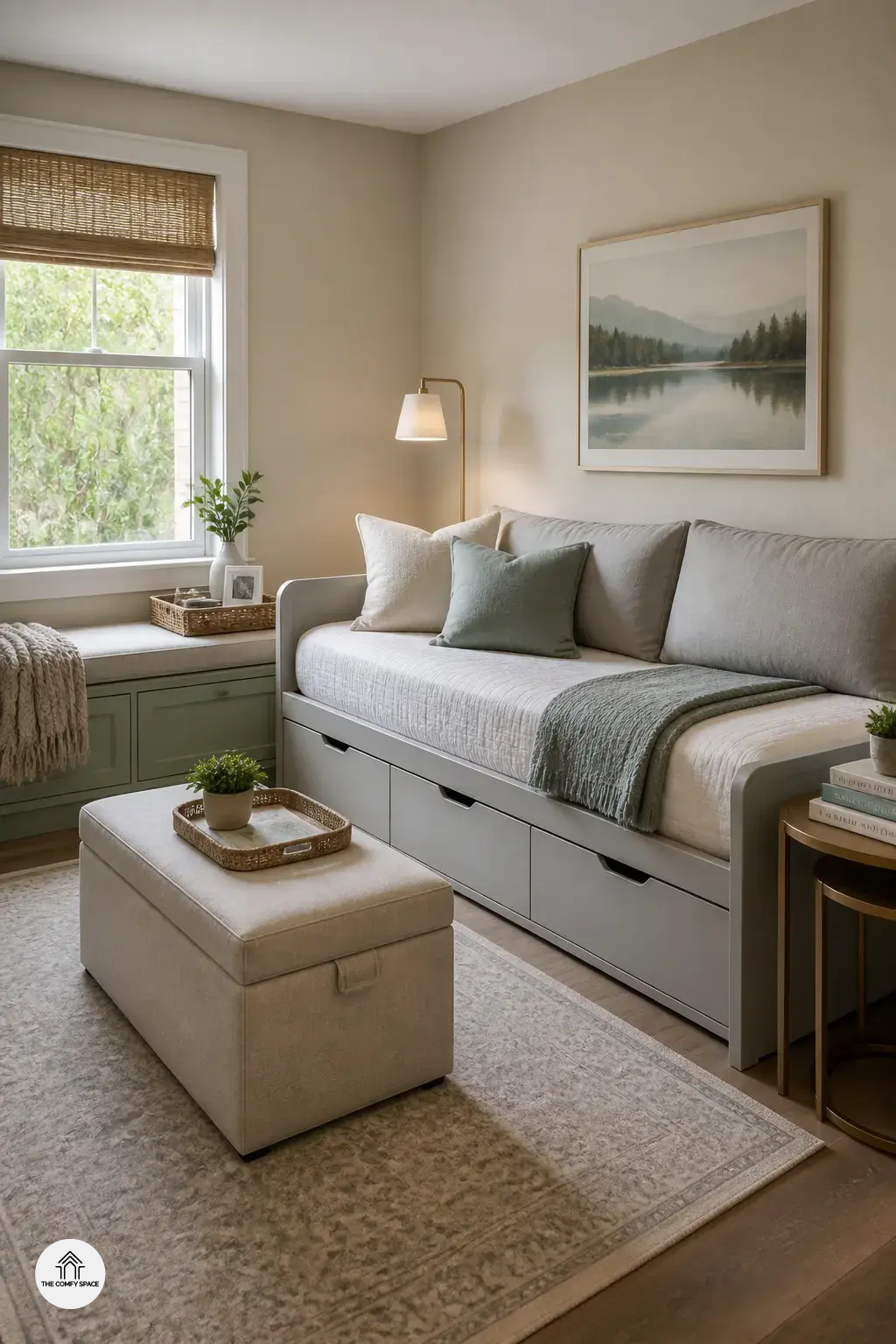
Build Smart Storage Into the Space
Build smart storage into the space, and suddenly your guest room stops acting like the house’s lost-and-found. I learned this the hard way after stuffing blankets, office papers, and a mystery charger into one closet. Not cute. A few wall shelves, under-bed drawers, and woven baskets from a familiar store like IKEA can make everything feel calm fast.
Try one easy system for extra linens, guest items, and daily clutter. Keep labels simple, and don’t overpack the room. As one home organizer says,
“A small space works best when every item has a clear home.”
Honestly, that little rule can save you from a catch-all disaster and make guests feel genuinely welcome.
Make the Room Feel Cozy Without Overcrowding It
Making a guest room cozy in a small home can feel like packing a suitcase with one too many sweaters. I once stuffed mine with “just one more” lamp, basket, and side table from IKEA, and suddenly the room felt like a storage closet with ambition. The trick is simple: choose a few soft textiles, warm lighting, and calm colors. As designer Sarah Richardson says, “A room should feel lived in, not crowded.” That little shift makes the space feel calm and welcoming.
Add small personal touches, too. A book, a water carafe, or a folded throw can make guests feel instantly cared for. And please resist the urge to decorate every blank corner. Empty space is not a design failure. It gives the room room to breathe. That’s the magic in multi-functional guest spaces: comfort, flexibility, and a little breathing room for everyone.
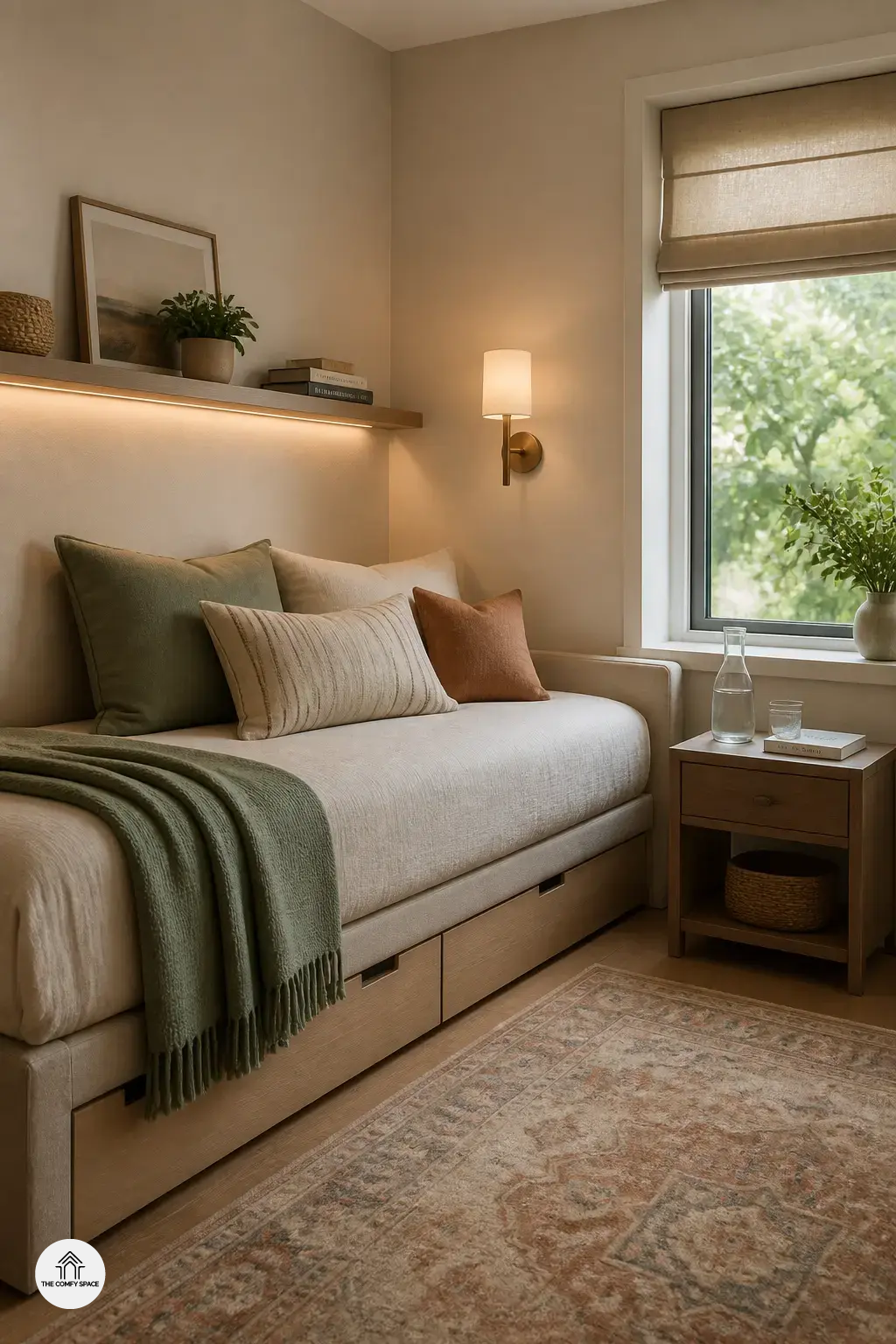
Design for Flexibility from Morning to Night
A flexible guest room has to work overtime, and honestly, that’s where the fun begins. I once crammed a desk, a bed, and a random plant stand from a big-box store into one tiny room and called it “cozy.” It was not cozy. It was chaos. The better move is to set up one space that can shift from morning laptop zone to evening sleepover spot without drama.
Choose movable pieces, light curtains, and decor that does not scream “hands off.” A small desk can become a reading nook, and a foldable chair can save the day. “A room should adapt to life, not the other way around,” interior designer Mia Carter says. Keep it practical for daily use, and it will never feel wasted. That is the sweet spot: smart, simple, and a little bit magical.