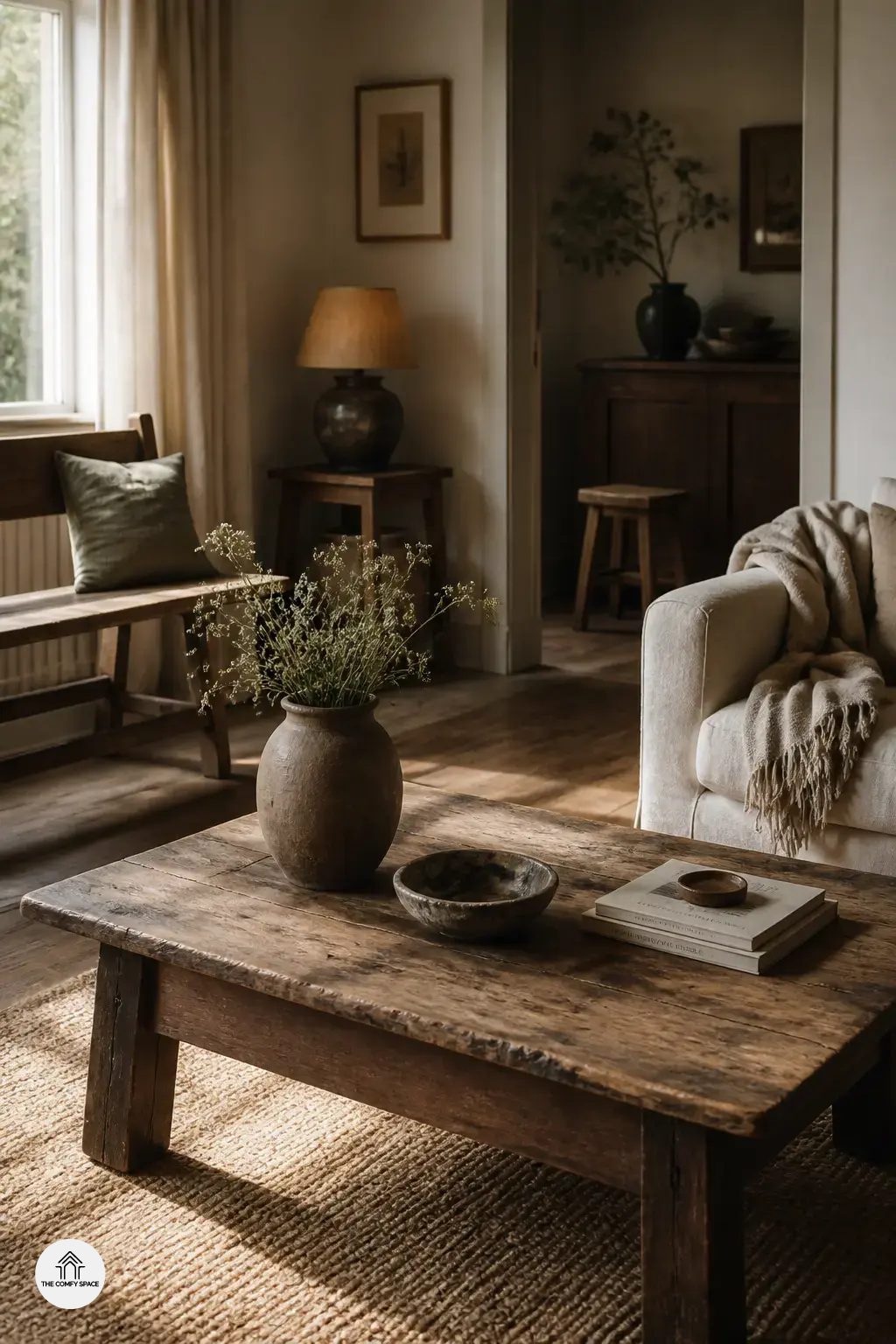
Wabi-sabi is all about finding beauty in the imperfect, the worn, and the wonderfully real. It celebrates homes that feel lived in, loved, and a little bit human, which is honestly a relief in a world full of perfect-looking feeds. If you have ever bought a vase from a big home store and later loved the tiny chip on it more than the original shine, you already get the vibe. “Perfection can feel cold; character feels warm,” interior stylist Sarah James says.
To bring this feeling home, start small. Keep the mug with the faded glaze, mix old wood with soft linen, and stop worrying if every cushion matches. I once tried to “fix” a scratched table from a thrift shop and made it worse, so yes, sometimes the mistake becomes the charm. Use a few favorite pieces, add natural textures, and let the room breathe. The goal is calm, not a showroom. Wabi-sabi reminds us that beauty can be simple, quiet, and a little delightfully messy.
What Wabi-Sabi Really Means in Interior Design
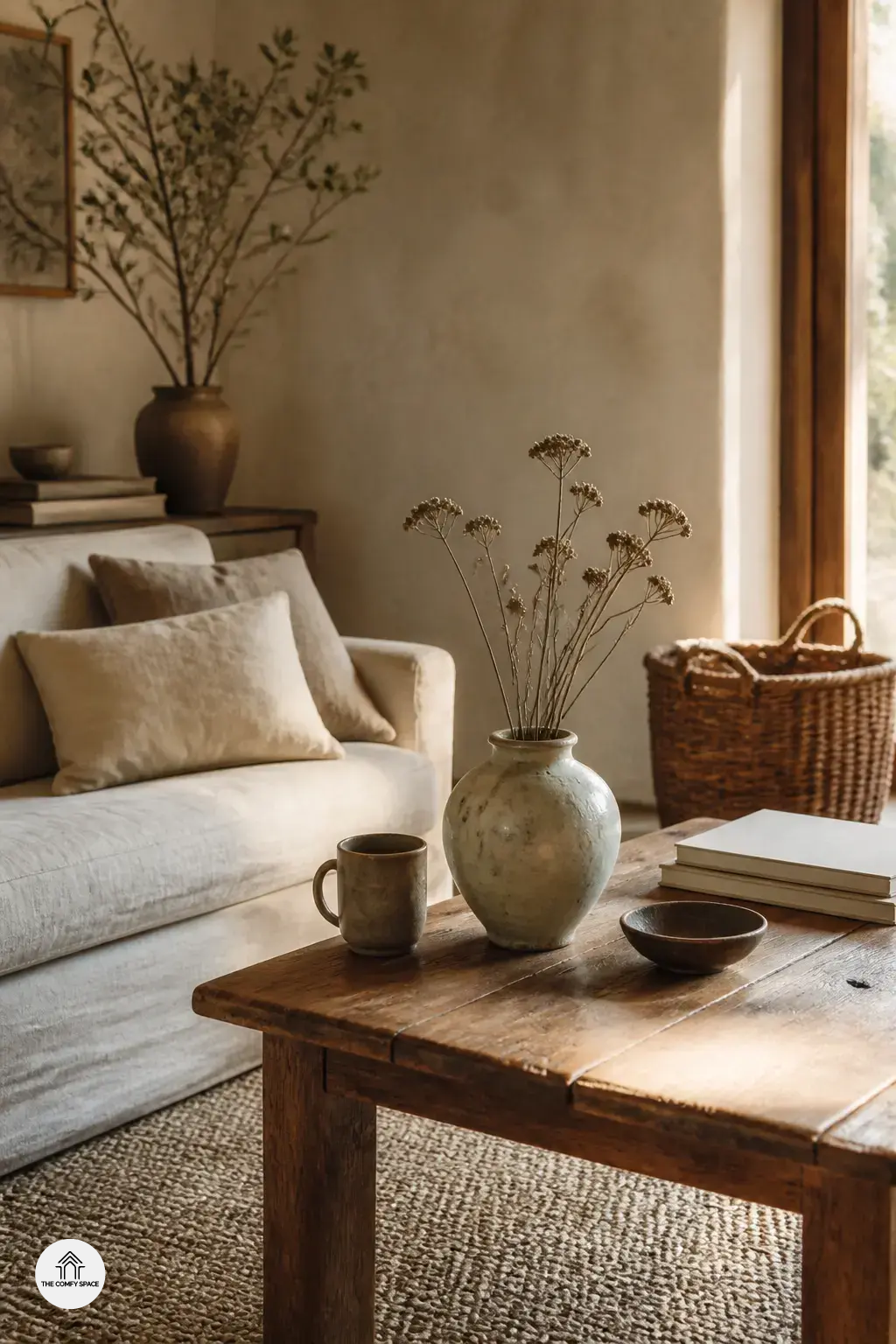
Wabi-sabi in interior design is really about slowing down and letting a home feel human. It starts with simplicity, natural beauty, and the quiet acceptance of imperfection. Think weathered wood, handmade bowls, and that slightly uneven vase you almost returned from the store but kept anyway. I’ve done the same. “Perfect rooms can feel cold; lived-in rooms feel loved,” interior designer Athena Calderone says. That idea makes the style feel less like a rulebook and more like a gentle exhale.
Instead of chasing a matchy-matchy look, focus on pieces that have soul. Mix rough linen with smooth ceramics, or a worn chair with a soft rug. A few thoughtful layers go further than a cart full of trendy décor. If something has a little scratch, dent, or story, Wabi-sabi says: keep it. Those little flaws add warmth, calm, and honesty to the room.
Natural Materials That Make a Space Feel Authentic
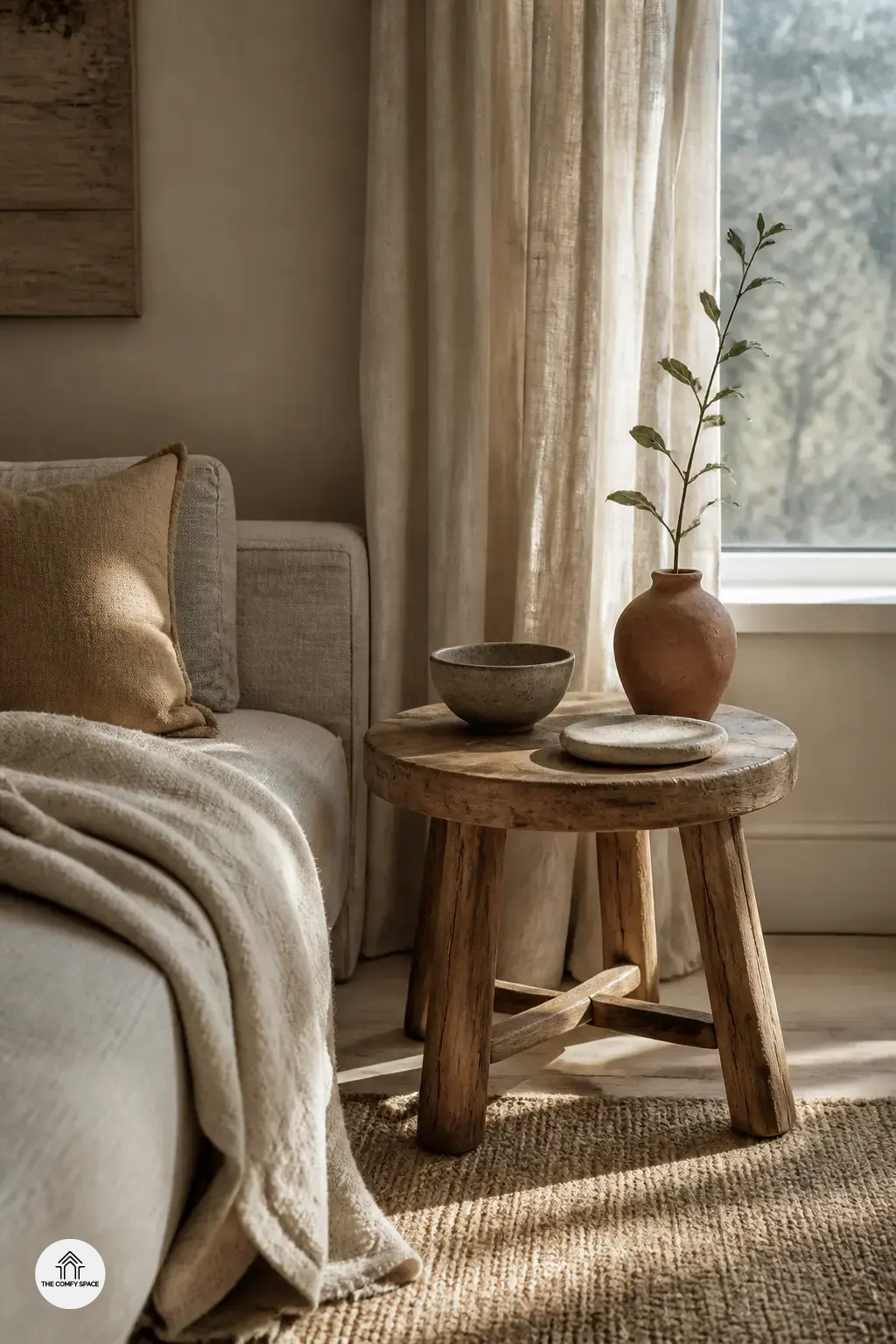
Natural materials are the secret sauce in Wabi-Sabi decor. Think wood, linen, clay, stone, wool, and ceramics with character. They do not shout for attention, and that is exactly why they work. I once bought a perfectly smooth side table and, honestly, it felt a little too “display home.” Then I swapped it for a slightly rough wooden one from a local shop, and the room finally breathed.
These materials age gracefully and bring warmth without trying too hard. A linen curtain, a handmade bowl, or a stone tray can make a space feel instantly more soulful.
“Choose pieces that feel lived-in, not showroom-perfect,” says interior designer Ana Morales.
It is a small shift, but it makes your home feel calm, honest, and delightfully human.
The Beauty of Imperfect Details and Everyday Objects
Wabi-sabi reminds us that a home does not need to look showroom-perfect to feel beautiful. A scratched table, a faded rug, or a ceramic mug with an uneven glaze can bring more comfort than something shiny and new. I once bought a “perfect” side table from a big store, and honestly, it felt a little cold. The one with a tiny dent? That’s the one I kept. “Imperfection is not a flaw; it’s character,” interior designer Bobby Berk says.
That is the heart of this style. Wabi-sabi teaches us to stop chasing flawless and start noticing charm. Try mixing old and new pieces, keeping a chipped bowl for keys, or letting a worn blanket stay visible instead of hiding it away. The little quirks in your home often become the things you love most over time, especially when life is busy and your space needs to feel calm, lived-in, and real.
How to Create a Calm Wabi-Sabi Color Palette
Creating a calm Wabi-Sabi color palette is really about breathing room. Start with soft neutrals, earthy browns, muted greens, and warm grays. They bring that grounded feeling without making the room look cold or overly styled. I once grabbed “safe” beige paint from a familiar store and still managed to choose the wrong one, because the undertone turned my wall a little too yellow. Lesson learned: test samples first.
The goal is to keep the palette quiet, but not boring. Mix tones gently so the space feels restful, like it finally stopped shouting for attention. A quote I love says,
“Color should support the mood, not compete with it.”
Try layering linen, wood, and clay accents to keep things soft and human. It is simple, calm, and just a little imperfect.
Common Wabi-Sabi Decorating Mistakes to Avoid
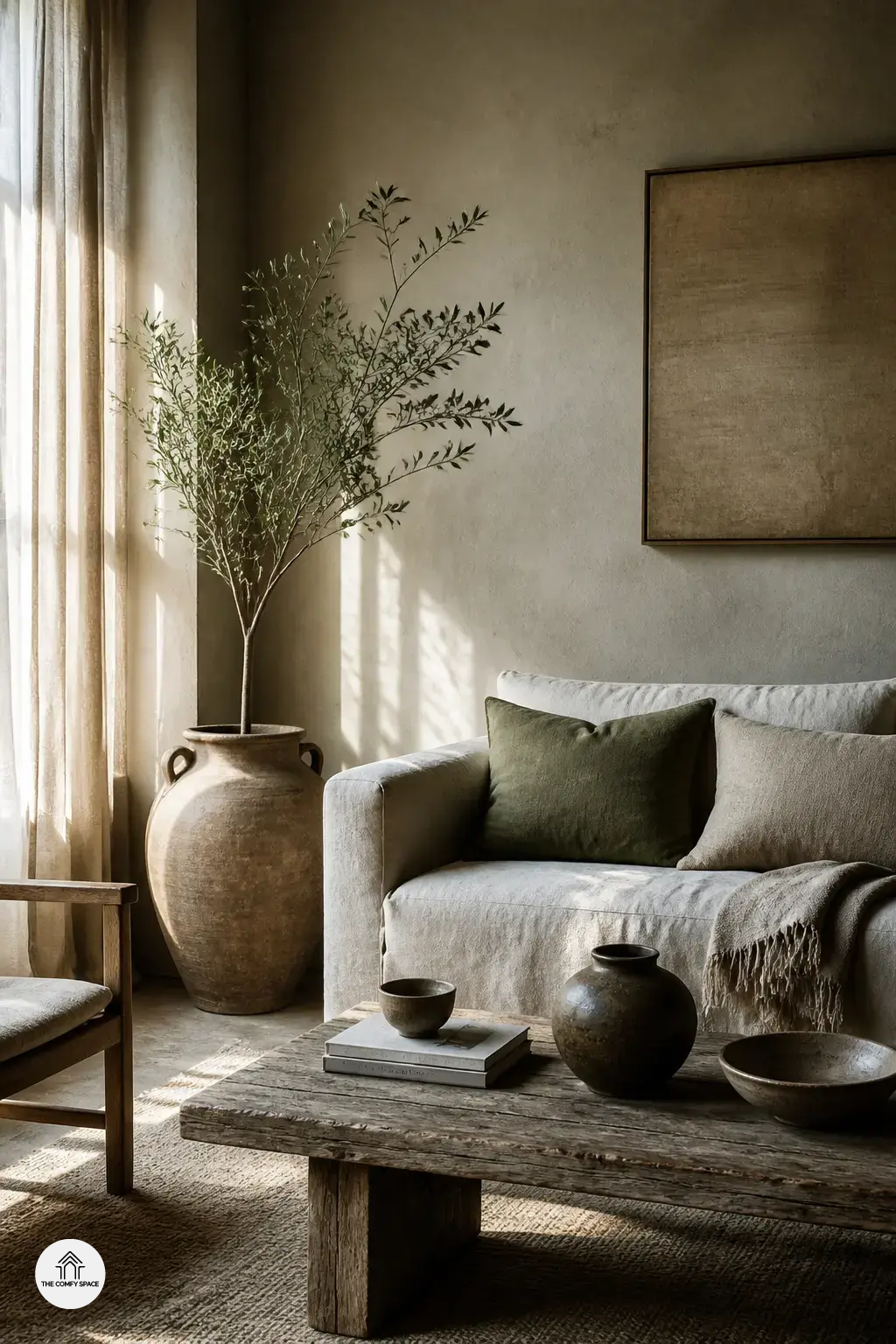
One big Wabi-Sabi decorating mistake is making a room so empty it feels like you forgot to move in. I did that once after a late-night trip to a home decor store, and my living room looked more “waiting room” than warm retreat. Wabi-Sabi should feel calm, but still lived-in. Add a soft throw, a worn wood table, or a handmade bowl. As designer Ilse Crawford says, “Design is about making people feel at home.”
Another trap is buying pricey pieces just because they look artsy on the shelf. Been there, regretted that. True Wabi-Sabi works best when the home grows slowly, with imperfect favorites collected over time. Mix old and new. Keep the dent in the vase. Let things breathe a little. That relaxed, slightly messy charm is the whole point, and honestly, it feels much easier to live with.
Simple Ways to Bring Wabi-Sabi Into Your Own Home
Wabi-sabi starts small, and honestly, that is the beauty of it. I once tried to “fix” a living room by buying too many matching things, and it ended up looking like a furniture catalog that forgot to smile. Start with one room. Remove anything that feels too polished or unnecessary. Then bring in handmade items, soft textures, and pieces with a story from your own life. As designer Naoto Fukasawa says, “People often don’t notice the beauty of things until they live with them.”
Even tiny changes can shift the mood fast. Keep that favorite chipped bowl on display. Use the worn-in wood bench that creaks a little, but in a charming way. Maybe your coffee table stays a bit messy—welcome to real life. Shopping at familiar stores is fine, but mix in thrift finds and family hand-me-downs too. That mix of calm, warmth, and honest imperfection is what makes wabi-sabi feel so comforting.