
Noise in a home office can sneak up on you fast. One minute you’re answering emails, the next you’re hearing the dishwasher, traffic, and that one chair that always squeaks at the worst time. I learned the hard way that buying one fancy “soundproof” gadget from a big-box store does not fix everything. “Small, thoughtful changes usually do more than one expensive purchase,” says interior designer Maya Collins.
A few low-cost tweaks can make a big difference, like sealing door gaps, adding rugs, or hanging thick curtains. Try moving your desk away from noisy walls and using bookcases as extra buffers. The goal is not perfect silence, but a calmer space you can actually work in. For me, that meant less frustration and fewer muttered complaints during Zoom calls. It is not glamorous, but it works.
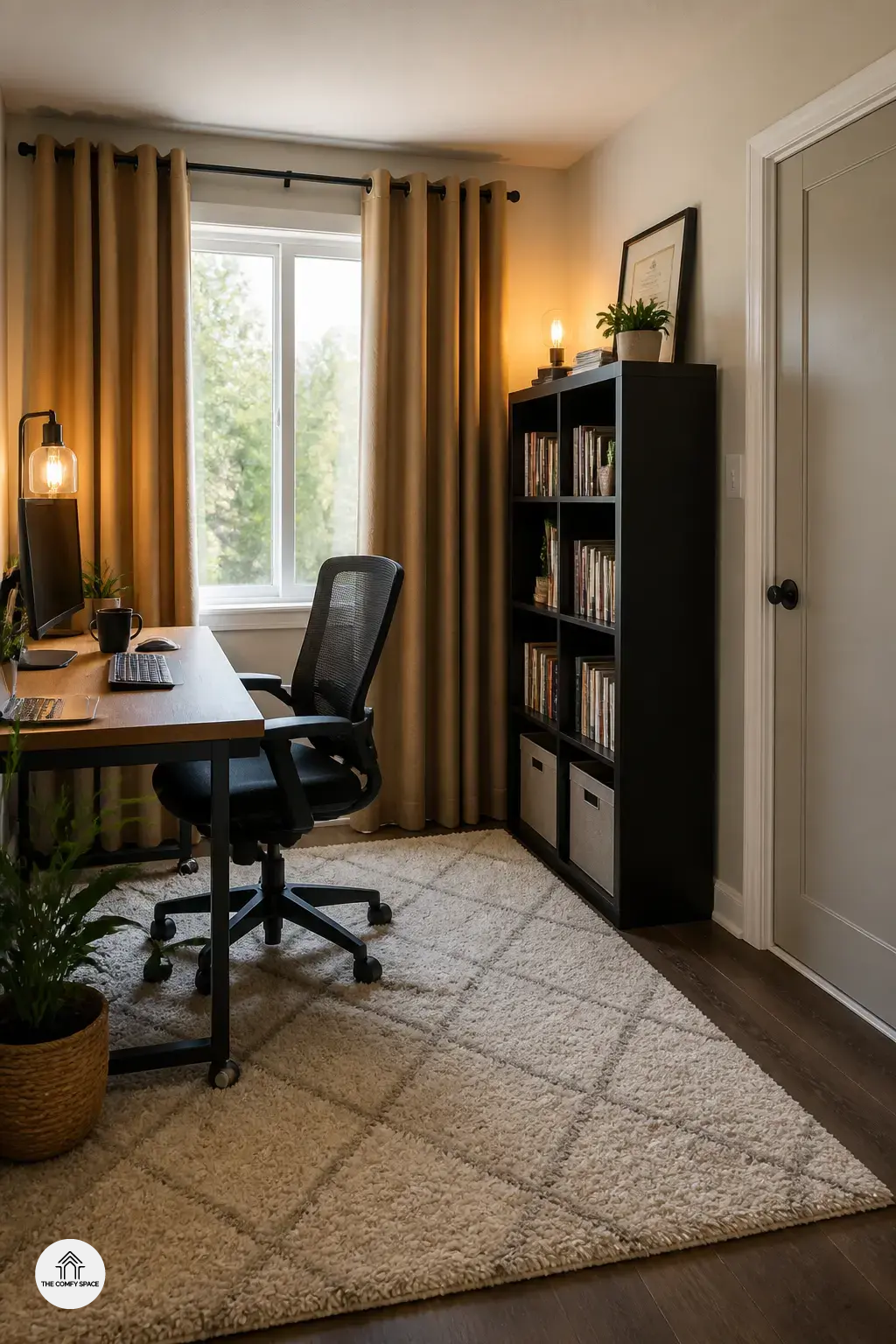
Find the Biggest Noise Problems First
Before you buy every “soundproofing” gadget at the store, play detective first. I once spent money on cute foam panels from a big-box store, only to realize the real problem was the gap under my office door. Oops. Start by listening for where the noise slips in: doors, windows, vents, and those sneaky thin walls.
- Notice if traffic, kids, pets, or roommates are the main culprits.
- Test one spot at a time so you do not chase the wrong fix.
- “Fix the loudest leak first, or you’ll spend twice,” says acoustic designer Maya Reed.
Why a Quieter Home Office Changes Everything
A noisy home office can wreck your focus faster than a broken coffee maker. Traffic hum, a barking dog, or kids turning the hallway into a racetrack all chip away at your energy. I learned that the hard way after one too many video calls where my voice sounded calm, but my face said, “I am barely holding it together.” Small fixes like rugs, curtains, and door seals can make a big difference.
A quieter room also makes work feel less chaotic and way more human. You can think clearly, take calls without apologizing every five minutes, and actually finish tasks without getting pulled in ten directions.
“Sound control is one of the simplest ways to improve comfort and concentration at home,” says interior designer Maya Collins.
Even a few budget-friendly changes from a hardware store or IKEA can turn a stressful corner into a calmer, more productive space.
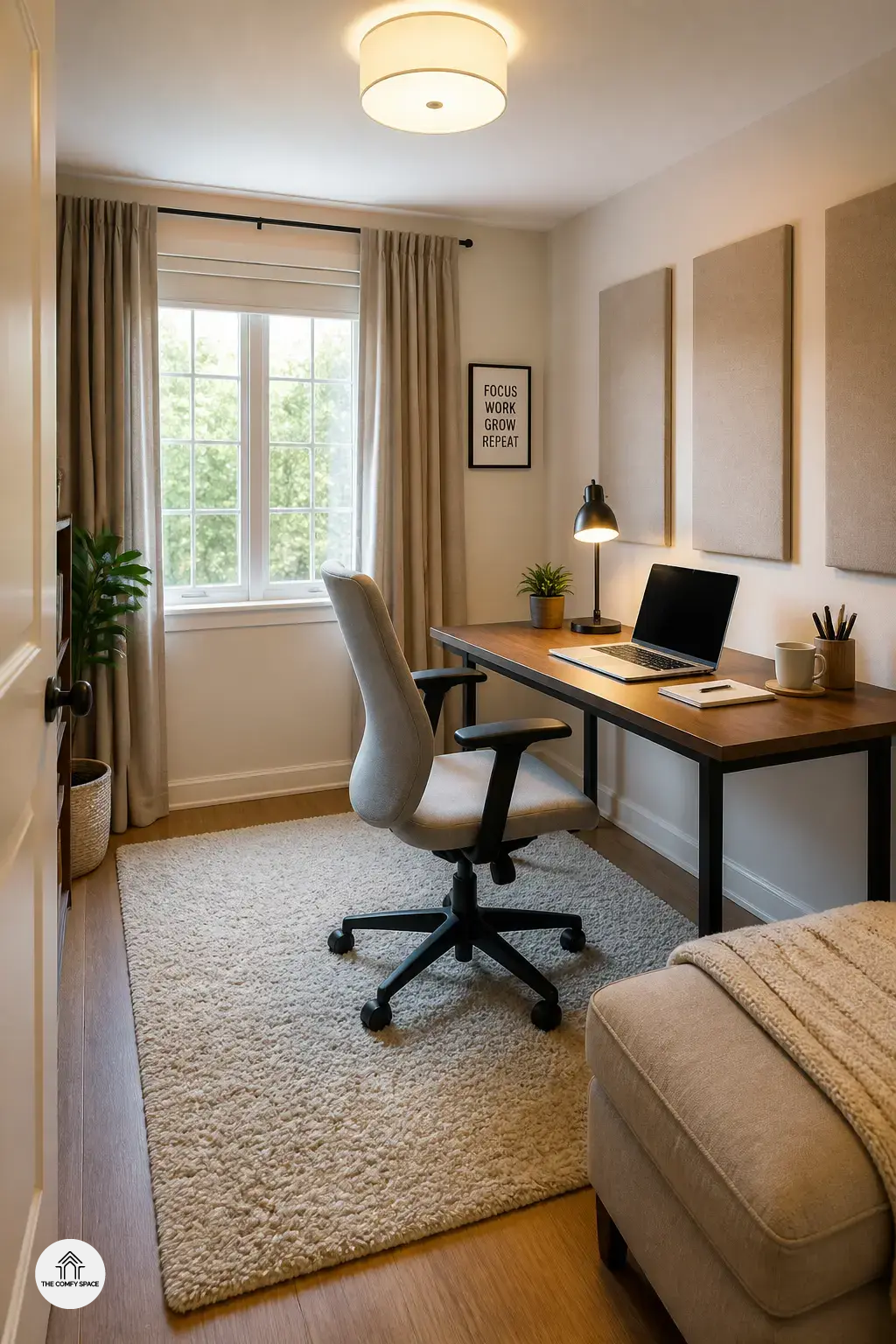
Start with the Cheapest Soundproofing Wins
Start with the cheapest wins first. I learned this the hard way after spending way too much on fancy gear and still hearing my neighbor’s lawn mower like it was in the room. Simple fixes from places like Home Depot or even IKEA can make a real difference fast.
- Use weatherstripping around doors and windows to stop sound leaks.
- Add a door sweep to block the gap under the door.
- Try thick curtains, rugs, or blankets for an instant softening effect.
“Seal the leaks before you chase the big upgrades,” acoustic consultant Dana Lee says.
Use Furniture and Soft Materials to Absorb Noise
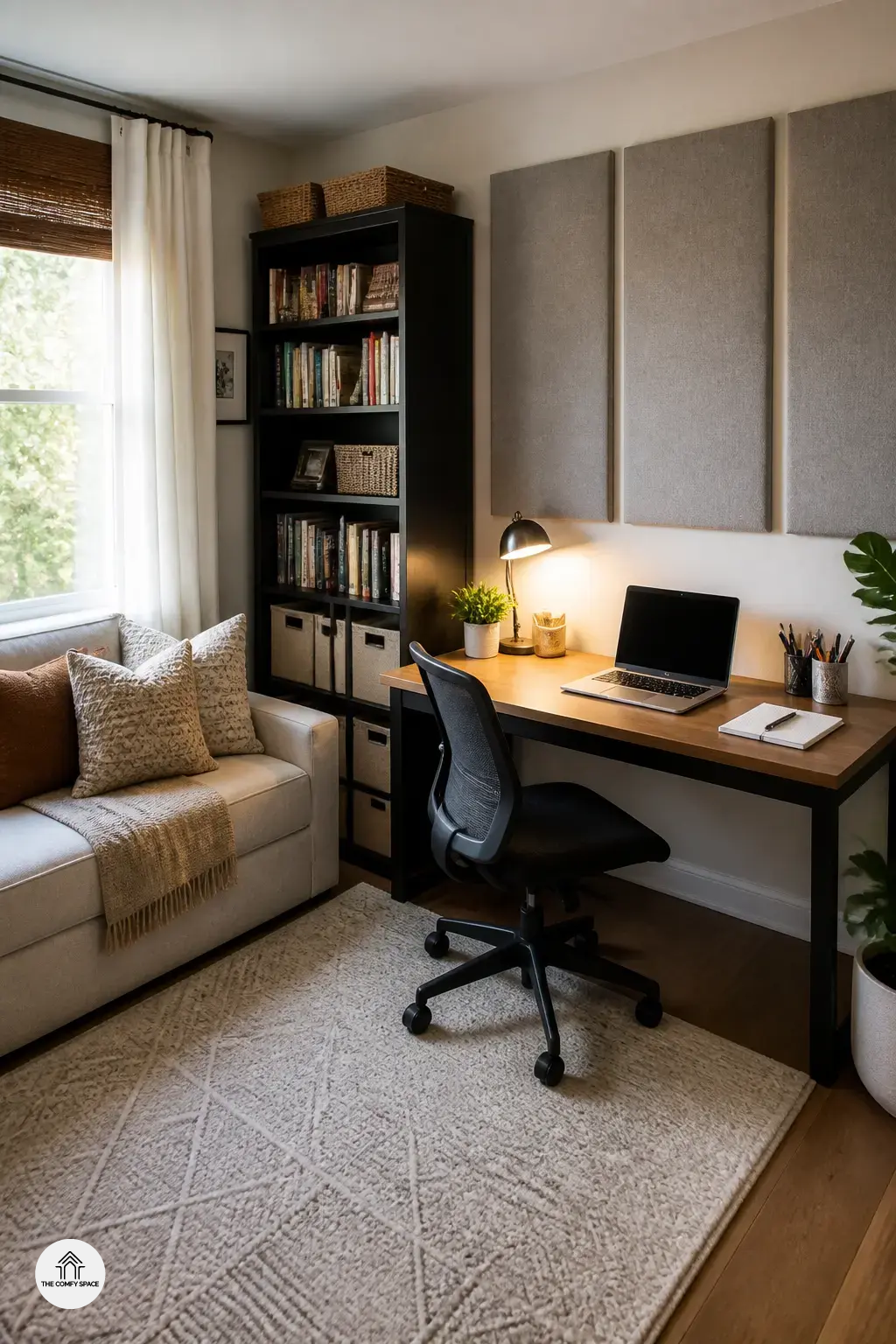
One of the easiest budget tricks is to let furniture do the heavy lifting. I once shoved a sad little desk against a shared wall and wondered why every Zoom call sounded like I was in a tin can. Big bookshelves, sofas, or storage units work better because they add mass and help block noise. As designer Nate Berkus says, “your home should tell the story of who you are,” and in a home office, that story can include a quieter room.
Try adding cushions, fabric panels, rugs, and layered textiles to soak up echo. A few well-placed throws from Target or IKEA can make a weirdly loud room feel calmer fast. Also, rearrange hard surfaces so they are not bouncing sound everywhere. It is a small shift, but it helps. I learned that the hard way after moving my chair near a bare wall and hearing every keyboard tap like a drum solo.
Affordable DIY Soundproofing Tricks That Actually Help
When I first tried to quiet my home office, I made the classic mistake of buying random foam and sticking it everywhere. Spoiler: it looked messy and didn’t fix the echo. A better budget move is to build simple acoustic panels with cheap materials from a hardware store, then place them near the noisiest spots. As acoustic designer Mark Harris says,
“Treat the problem areas first, not the whole room.”
You can also use foam panels sparingly where sound bounces the most, like behind your desk or near a bare wall. And don’t overlook everyday stuff. Moving blankets, felt pads, and even thick curtains can help. I once grabbed felt pads from a familiar big-box store and suddenly my chair stopped squeaking like a tiny haunted cart. Little fixes like these really add up.
How to Reduce Noise from Windows, Doors, and Shared Walls
Windows, doors, and shared walls are usually the sneaky troublemakers in a home office. I learned that the hard way after hearing every delivery truck like it was parked in my chair. Start small and cheap:
- Seal tiny cracks with caulk or acoustic sealant.
- Hang layered curtains or try window inserts for extra hush.
- Focus on the noisiest wall first, especially if it faces a hallway or busy street.
“You do not need a studio budget to make a room calmer,” says acoustics consultant Maya Reed. That advice saved me from overbuying random foam at the hardware store. A few smart fixes at the window and door can make your office feel way quieter, and way less like the world is intruding on your Zoom call.
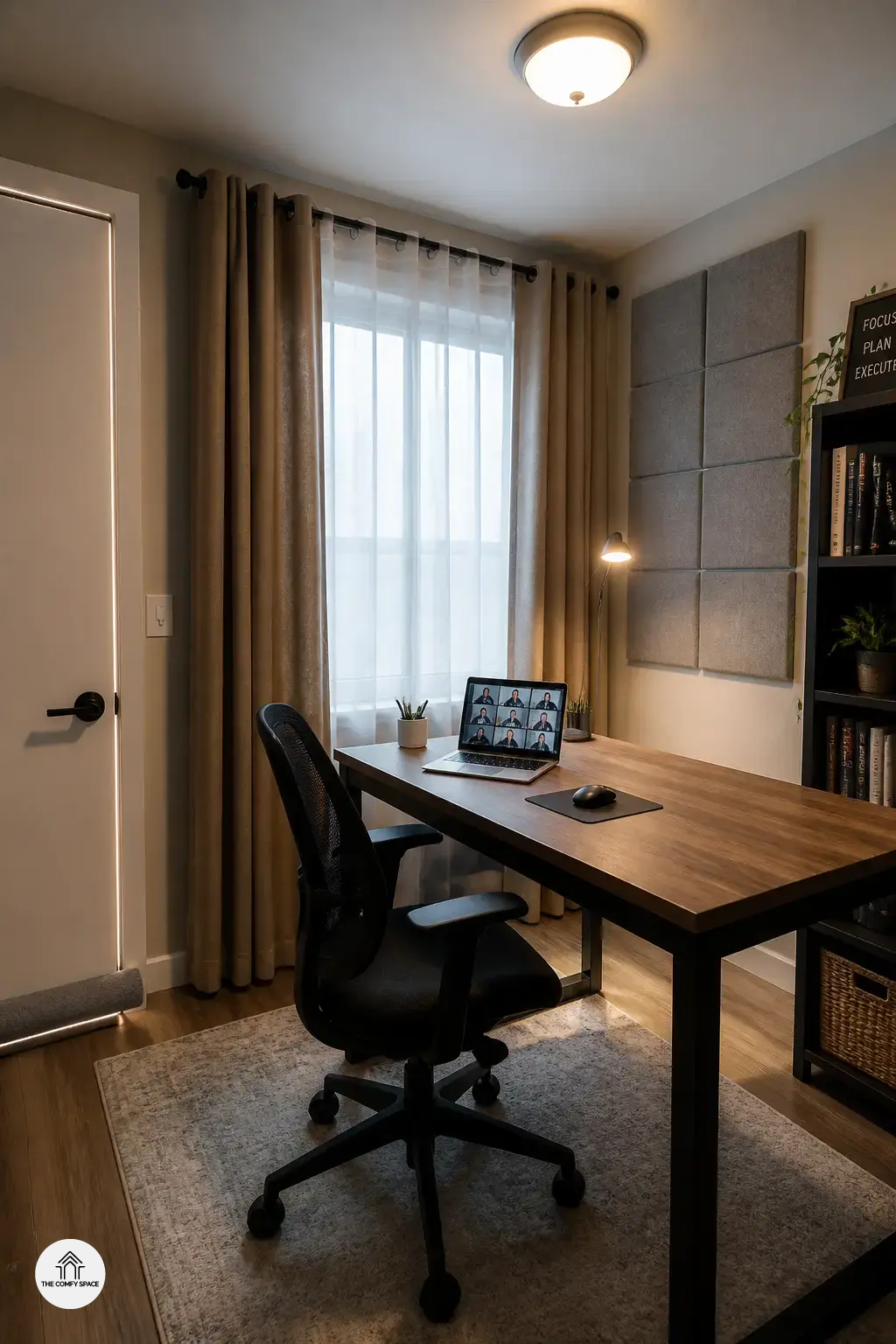
Budget-Friendly Habits That Make Your Office Quieter Every Day
If your home office feels noisy all day, small habits can make a big difference. I once learned the hard way that taking calls right next to the kitchen is basically an open invitation for blender chaos. Try to schedule calls during quieter hours when possible, and keep noisy equipment away from your desk. Closing doors sounds almost too simple, but wow, it helps.
- Use white noise or a fan to mask background sounds
- Keep printers and other noisy gear farther from your workspace
- Close doors and windows when you need focus
“Small daily changes often create the biggest noise relief,” says acoustic designer Maya Reed.
Even a cheap fan from a familiar store can save your sanity. Budget soundproofing is really about stacking little wins, not chasing perfection.