
Fluted surfaces feel so fresh right now because they do something simple, but a little magical: they turn flat cabinets, walls, and furniture into something that catches the light and quietly steals the show. It’s the kind of detail that makes a plain kitchen look styled, even if you still have a pile of mail on the counter. “Texture gives a room its heartbeat,” interior designer Maya Collins says.
- Adds instant depth and visual rhythm to flat surfaces
- Brings a soft, architectural feel without making a room look busy
- Works in modern, classic, and minimalist interiors alike
I once picked the wrong finish on a cabinet door at a big-box store and learned fast: texture matters more than I thought. Fluting is the easy fix.
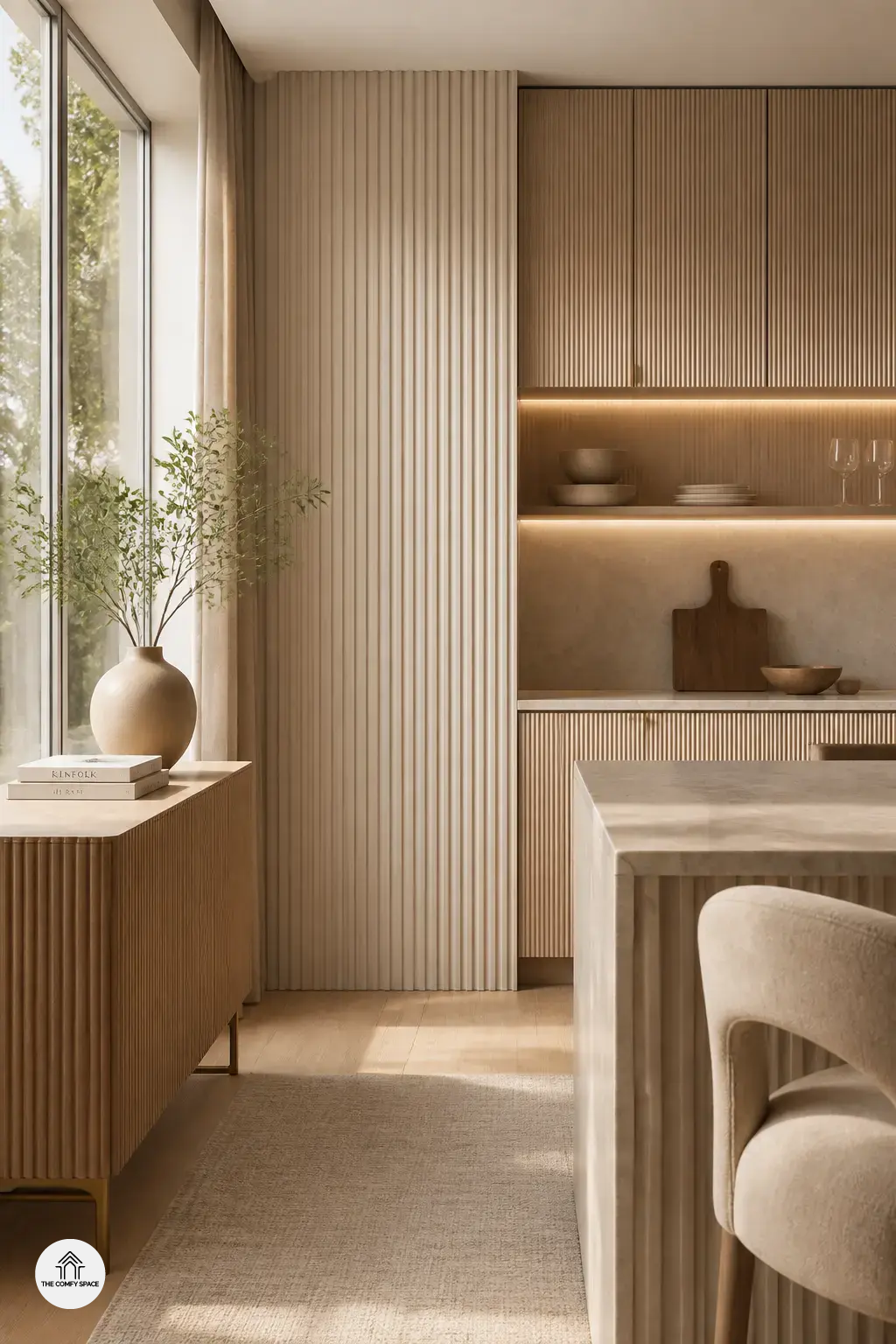
Fluted Cabinets That Make Everyday Storage Look Styled
Fluted cabinets are one of those design wins that make you feel a little smug every time you walk past them. They work beautifully on kitchen islands, bathroom vanities, and media units, giving everyday storage a polished, custom look without trying too hard. I once picked a super plain cabinet front and instantly regretted it after one week of fingerprints and mystery smudges. As designer Nate Berkus says, “Your home should tell the story of who you are.”
- They hide small marks better than smooth panels.
- They add depth without loud patterns.
- They make basic cabinetry feel expensive fast.
Try them in a space that needs character but not chaos. Easy little upgrade, big visual payoff.
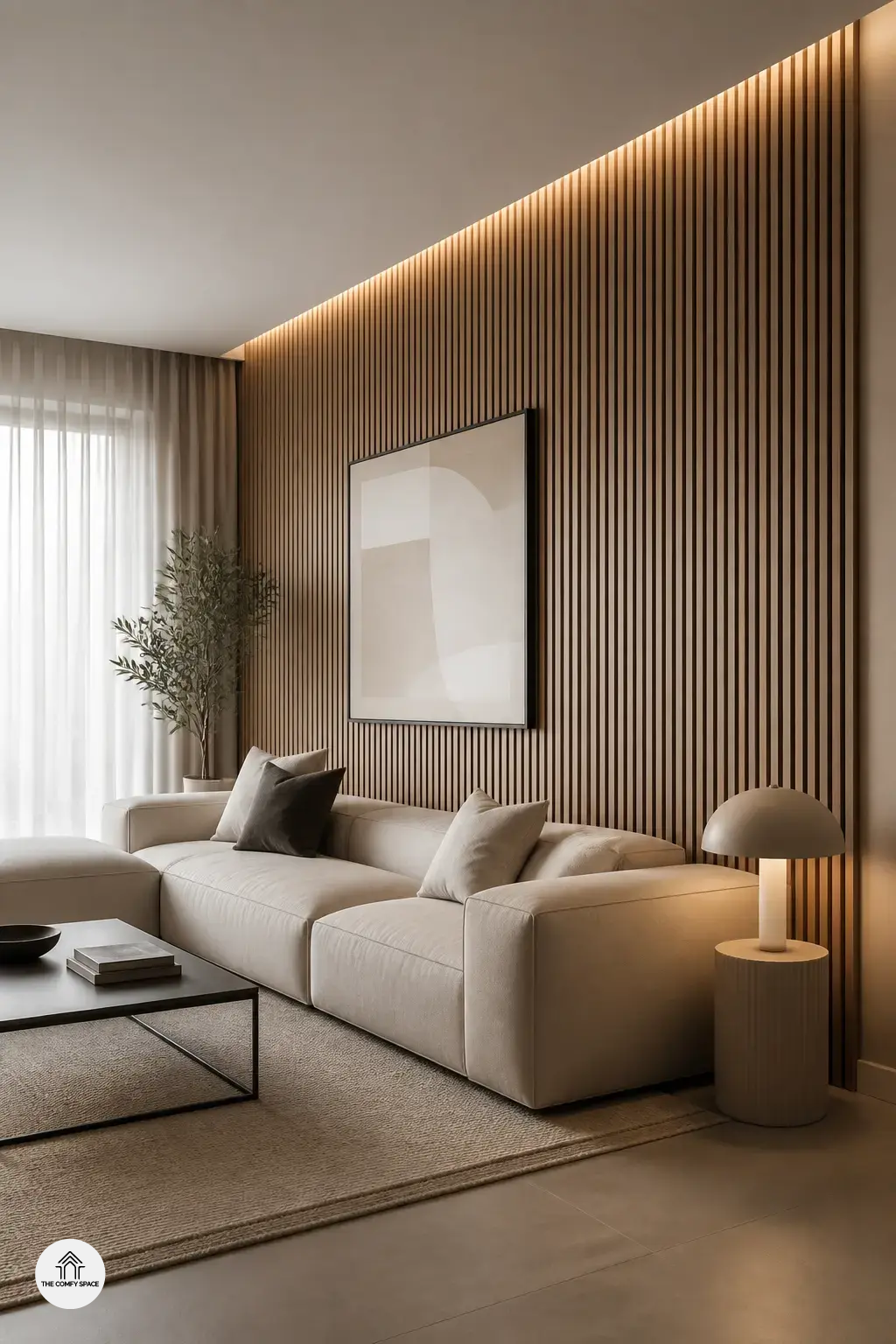
Feature Walls With Texture That Do More Than Just Fill Space
Feature walls with fluted texture can do a lot more than fill an empty spot. They add shape, depth, and a little drama without shouting. I once tried to make a tiny entryway feel “designer” and ended up making it look busy. Lesson learned: one strong wall is enough. As designer Nina Campbell says, “Texture gives a room its soul.” That’s especially true behind beds, sofas, or in a hallway where a flat wall just feels shy.
- Use fluted panels as the main focal point.
- Keep nearby finishes calm, like smooth paint or simple fabrics.
- Choose warm wood for softness or painted MDF for a cleaner look.
When you balance it right, the wall feels intentional, not overdone. It’s the kind of upgrade that looks expensive, even if you found half the pieces on a regular shopping trip at IKEA.
Furniture Pieces That Use Fluting Without Taking Over the Room
Fluted furniture is one of those design tricks that looks fancy, but doesn’t have to shout. Sideboards, nightstands, and coffee tables can pick up just enough texture to feel special without bossing the room around. I once bought a super plain nightstand from a familiar big-box store and immediately regretted how boring it felt. A fluted piece would have fixed that fast. As designer Kara Mann says,
“Texture is what keeps a room from feeling flat.”
Smaller pieces are also the safest place to start if you’re nervous about committing. They let you test the look before going all in on a big cabinet or wall treatment. And if your room already has plenty of color and pattern, fluting is a smart little breather. It adds interest without starting a visual shouting match. Honestly, that’s the sweet spot: stylish, calm, and just a bit playful.
Materials and Finishes That Make Fluting Look High-End
Materials can make or break fluting. I learned that the hard way after falling for a glossy sample that looked amazing in the store and a bit too flashy at home. Wood brings warmth, paint gives a cleaner look, and stone feels more dramatic. If you want the texture to feel calm and expensive, matte finishes usually soften the grooves better than high gloss. As designer Nina Hart says, “The finish should let the pattern breathe, not shout over it.”
For cabinets, walls, or furniture, choose the material based on how much maintenance you are realistically willing to do. Pretty is great, but scrubbing fingerprints off a shiny surface after a long day? Not fun. A matte painted cabinet can hide daily chaos better, while fluted wood adds cozy character.
- Pick low-maintenance finishes for busy homes
- Test samples in natural light first
- Match the texture to the room’s mood
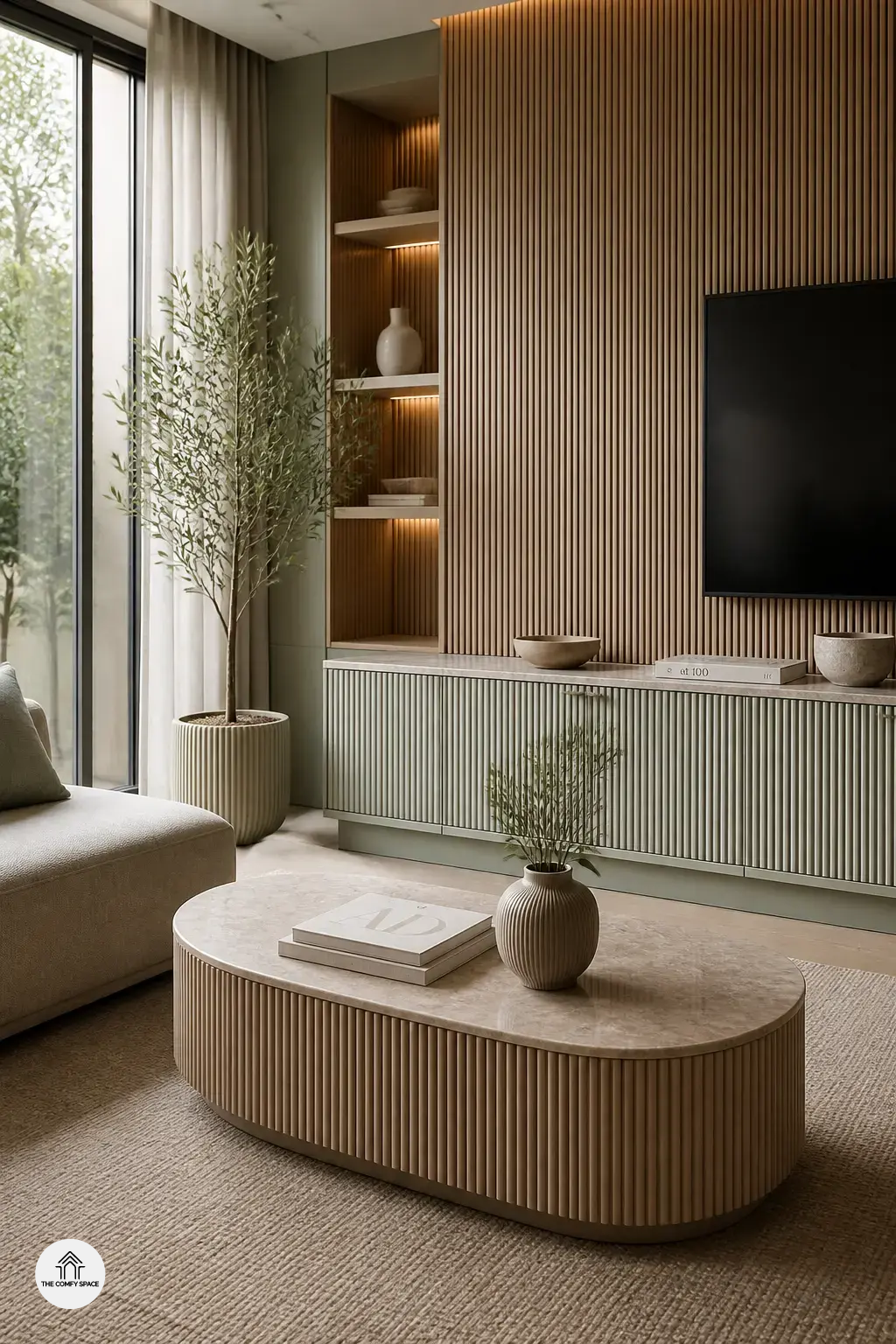
Common Mistakes to Avoid When Styling Fluted Details
Fluted details can look chic fast, but it is easy to overdo them. One mistake I made while helping style a living room was putting fluting on the cabinets, coffee table, and sideboard at once. Yikes. The room started to feel a bit loud, like it was trying too hard. A designer once told me,
“Texture should whisper, not shout.”
Keep it simple. Choose one or two hero pieces and let them breathe.
Scale matters too. Tiny flutes on a big wall can look fussy, while chunky ones on a small cabinet may feel heavy. And please, do not forget lighting. Without it, the texture can disappear faster than your impulse-buy candle from Target. Try soft side lighting or a lamp nearby to catch the shadows. That little glow makes fluted surfaces feel rich, warm, and actually worth the splurge.