
Textured limewash walls have this cozy, can’t-quite-put-your-finger-on-it charm. The soft movement in the finish adds instant warmth, and the layered look makes a room feel relaxed and authentic. I once tried a perfectly flat paint in my hallway and, honestly, every tiny dent from moving furniture looked like it was shouting at me. Limewash is kinder. As designer Sarah Jones says,
“Texture makes a space feel lived in, not staged.”
That’s why it’s such a smart choice for busy homes. It hides small wall flaws better than a flat painted surface, which feels like a tiny miracle after a long weekend of DIY and a questionable trip to the hardware store. Keep the rest simple with warm wood, linen, and soft lighting so the finish can do the heavy lifting.
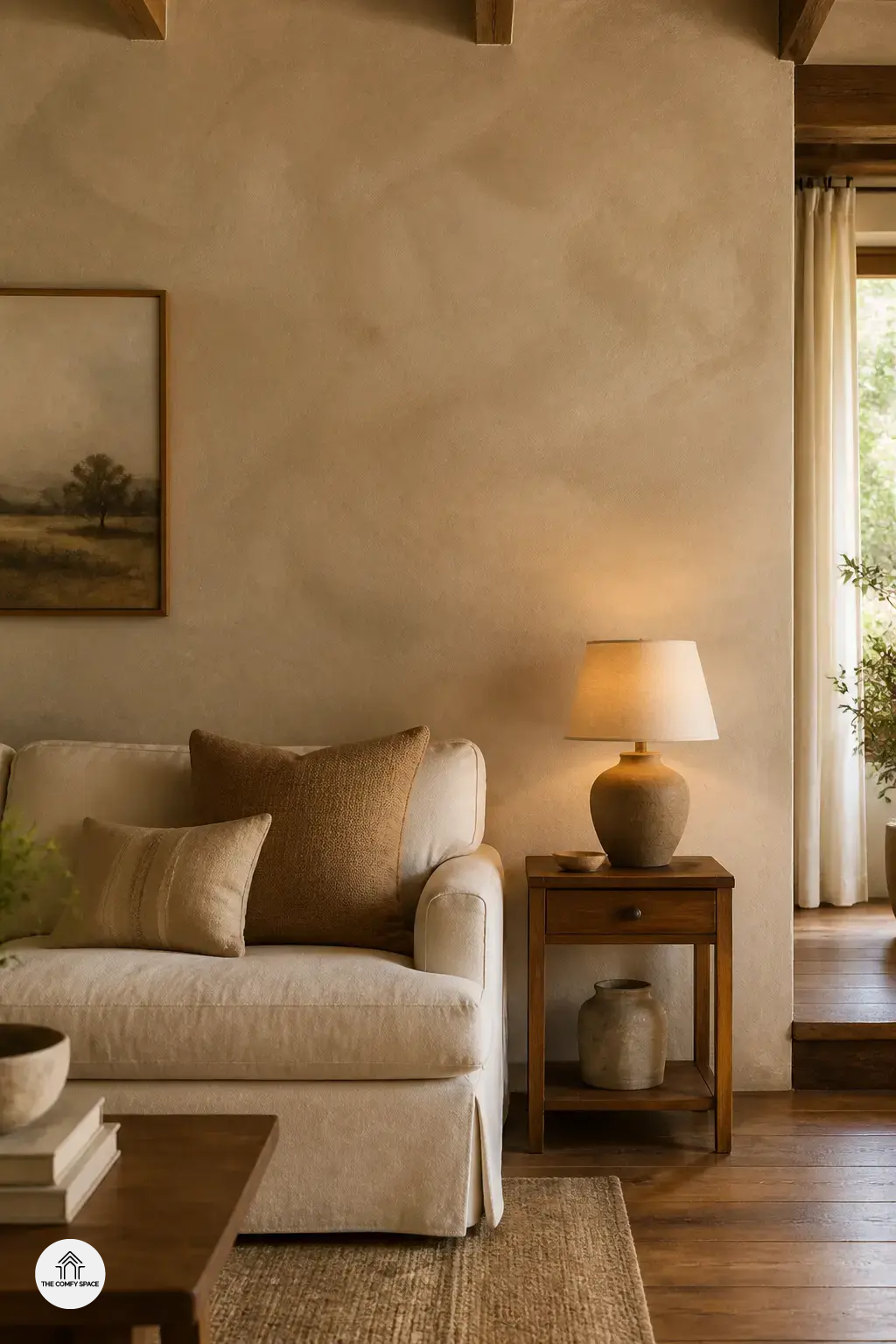
Choosing the Right Limewash Color for Your Space
Choosing the right limewash color can feel a bit like picking paint at the hardware store and then second-guessing yourself in the parking lot. Warm neutrals are usually the safest win. They give that cozy, sun-kissed feel without shouting for attention. In real life, I once picked a shade that looked dreamy under store lights and weirdly gray at home. Classic mistake.
Earthy tones work beautifully in bedrooms, living rooms, and hallways because they feel calm and lived-in.
“Always test samples on different walls, because light changes everything,” says interior designer Mara Ellis.
Try a few patches and check them morning and night. It saves regret, which is basically a design superpower.
How to Get That Soft Textured Look Without Overdoing It
Getting that soft, textured limewash look is a little like making good coffee: if you fuss too much, it turns weird fast. I learned that the hard way after trying to “fix” one wall from a big-box store. Big mistake. Keep your strokes light and uneven, and work in small sections so the finish stays relaxed and organic. As one pro put it,
“Perfection kills the character.”
Also, step back often. What looks messy up close can feel beautifully lived-in from across the room. Don’t chase a spotless, uniform coat. That’s not the vibe. Let the subtle marks stay. They add warmth, depth, and that quietly stylish finish that makes a space feel like home, not a showroom. And honestly, that’s the fun part.
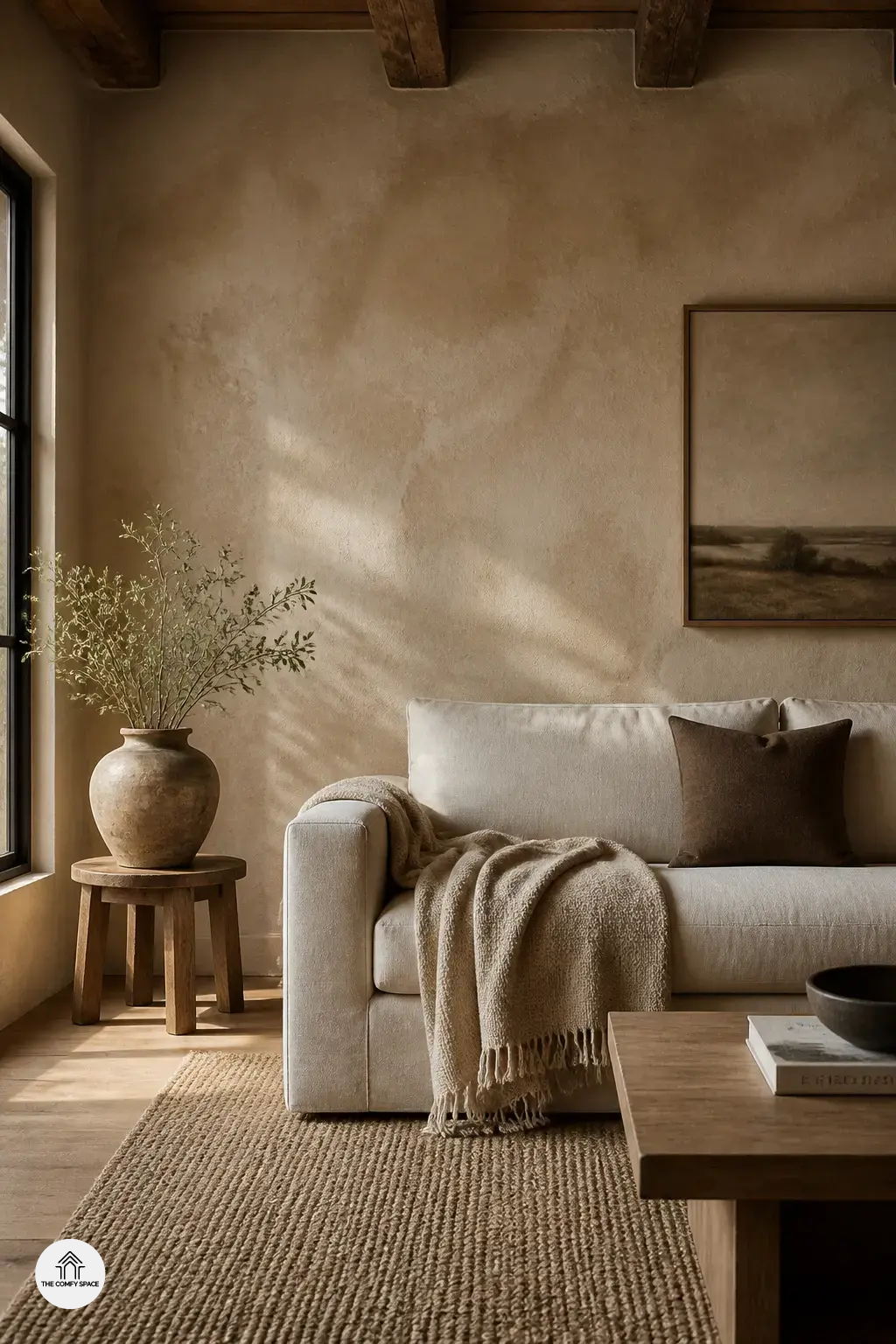
Best Rooms for a Lived-In Limewash Finish
The best rooms for a lived-in limewash finish are usually the ones where you want a little soul. Living rooms love that cozy, layered look. It softens sharp edges and makes the sofa-and-throw-pillow situation feel a bit more intentional, even if you bought the rug on a panic trip to Target. Bedrooms are another win, especially in muted tones that calm the whole space down. As one designer puts it,
“Texture should feel effortless, not perfect.”
Entryways and dining rooms also shine with limewash because they gain character fast, without needing a full makeover. I once rushed a test patch and learned the hard way: too much contrast can make the finish look messy instead of relaxed. Keep your palette soft, layer in warm wood, and let the wall do the talking. That slightly uneven texture is the charm. It feels collected, lived-in, and just a little bit magical.
Common Limewash Mistakes People Make
Common limewash mistakes usually show up when you rush the fun part and skip the boring prep. I once grabbed a shade that looked soft in the store, then it hit the wall like a neon surprise. Not ideal. A designer friend laughed and said, “paint chips lie sometimes,” and honestly, they do.
- Choosing a color that looks too bright on the wall
- Applying the product too evenly and losing the texture
- Forgetting to prep the surface and ending up with patchy results
Take your time, test a sample, and embrace a little wobble. Limewash is supposed to feel warm and lived-in, not perfect. That imperfect finish is the charm, even if it means a few extra passes and a small mess from the roller tray.
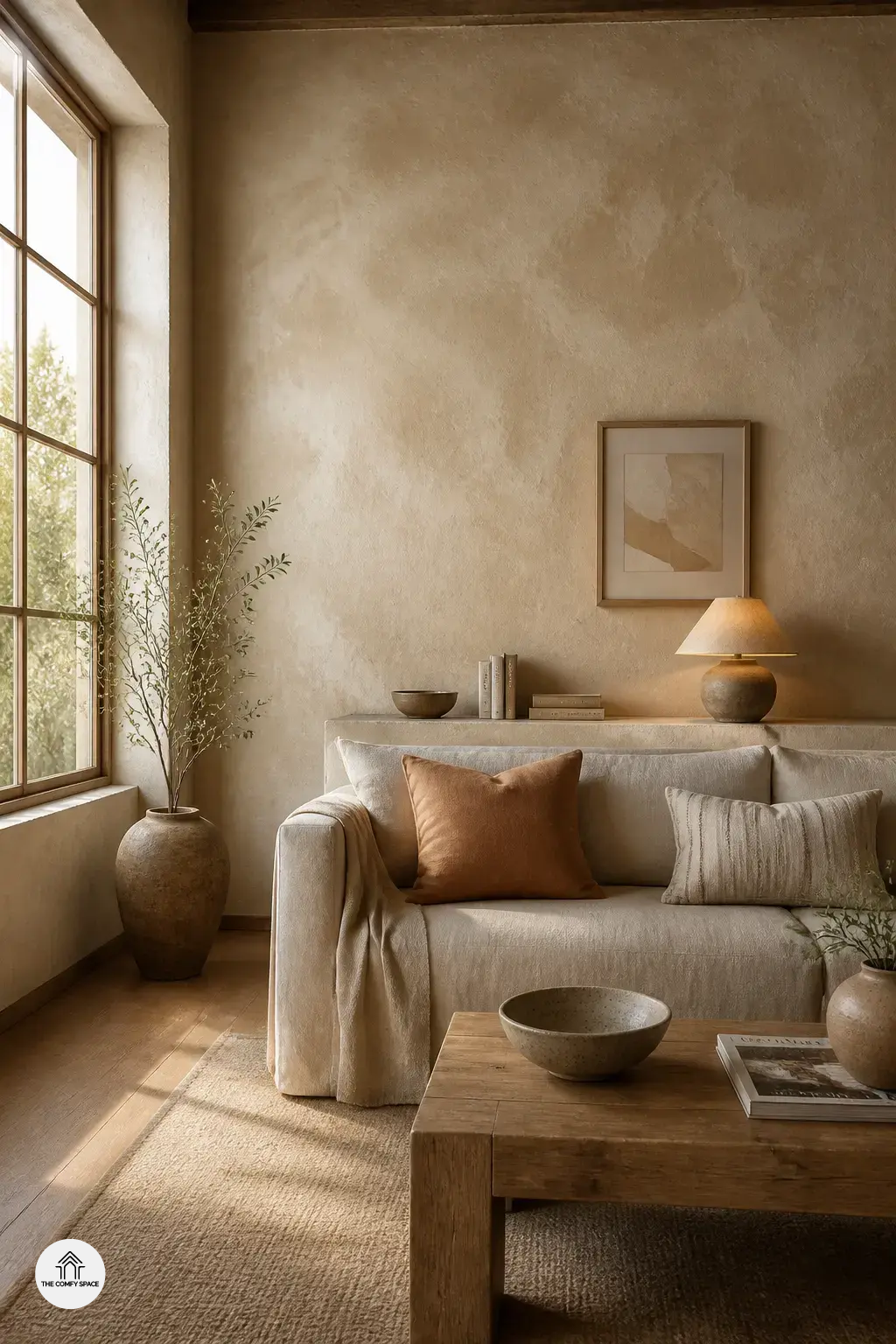
Styling Furniture and Decor Around Limewashed Walls
Styling furniture around limewashed walls is a little like dressing a great character actor: let the walls do the talking, and the room instantly feels richer. I learned that the hard way after buying a shiny side table at a big-box store, and wow, it fought the texture like a toddler at bedtime. Natural wood and woven textures make the finish feel even warmer, while simple decor keeps the walls front and center.
Try matte accessories, vintage finds, and a few soft layers so the room feels lived-in, not overly polished. As designer Sarah Sherman Samuel says,
“Texture is what makes a space feel collected, not staged.”
I like to mix one statement chair, a ceramic lamp, and a thrifted basket. It is an easy way to make limewashed walls look intentional, cozy, and a little bit charmingly imperfect.