
A calm room helps your mind settle before you even roll out your mat. I learned this after turning my “yoga corner” into a chaos corner with extra blankets, a water bottle, and three random candles from a big-box store. Not exactly zen. Keep it simple with soft light, one mat, and a plant or two. As designer Marie Kondo says, “The question of what you want to own is actually the question of how you want to live.”
Less clutter means fewer distractions and more focus on your breathing. Minimalist decor also makes even a tiny corner feel open, light, and peaceful. Try neutral colors, a basket for props, and one favorite item only. It feels oddly fancy, like your home is whispering, “Relax, you’ve got this.”
Choose the Right Spot in Your Home
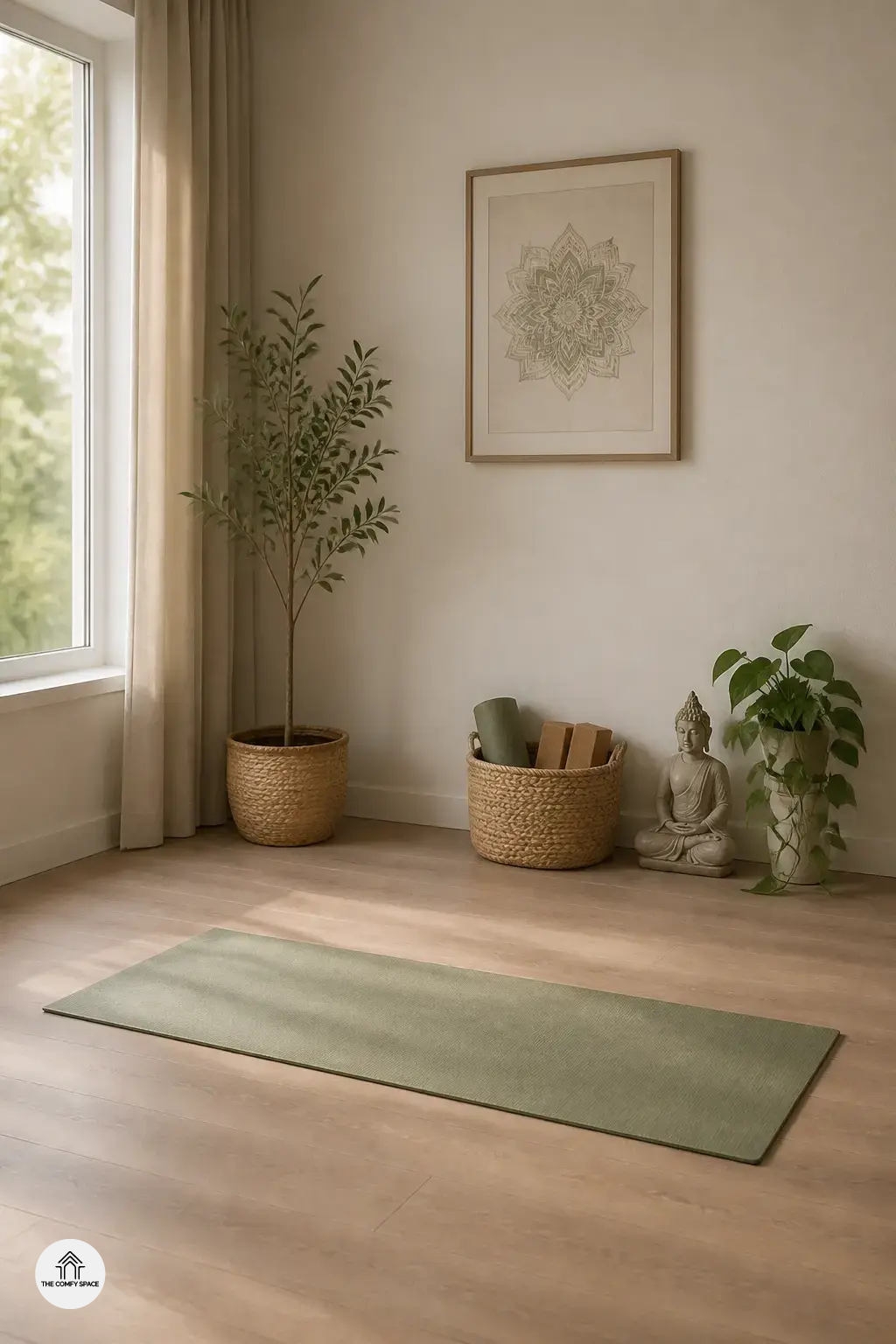
Choosing the right spot for your home yoga space can make or break the whole vibe. I learned that the hard way after setting my mat next to the TV and immediately getting distracted by a cooking show. Not ideal. Look for a quiet area with natural light, like a spare corner, bedroom nook, or even the edge of your living room. “A calm space helps the mind settle faster,” interior designer Mia Clarke says.
Try to avoid busy zones near kitchen traffic, noisy doors, or that laundry pile that somehow becomes decor. Even a tiny spot can feel peaceful if it is easy to reach every day. Keep it simple. Add one mat, one candle, maybe a plant. No need to turn it into a showroom from a fancy store. The best yoga corner is the one you will actually use.
Pick a Simple Color Palette That Calms You
Pick a simple color palette that calms you, and suddenly the room stops yelling for attention. I learned that the hard way after buying “bold and inspiring” paint samples that looked great in the store and weirdly stressful at home. Soft neutrals like beige, warm white, and pale gray make a yoga corner feel quiet and easy to breathe in.
Earth tones, muted greens, and dusty blues also work beautifully. They add warmth without visual noise.
“A calming palette helps the body relax before the first stretch begins,” interior designer Maya Collins says.
Try to keep colors gentle so the space supports your practice instead of competing with it. Simple wins here. Your future self, mid-savasana, will thank you.
Use Only the Essentials for a Clean Layout
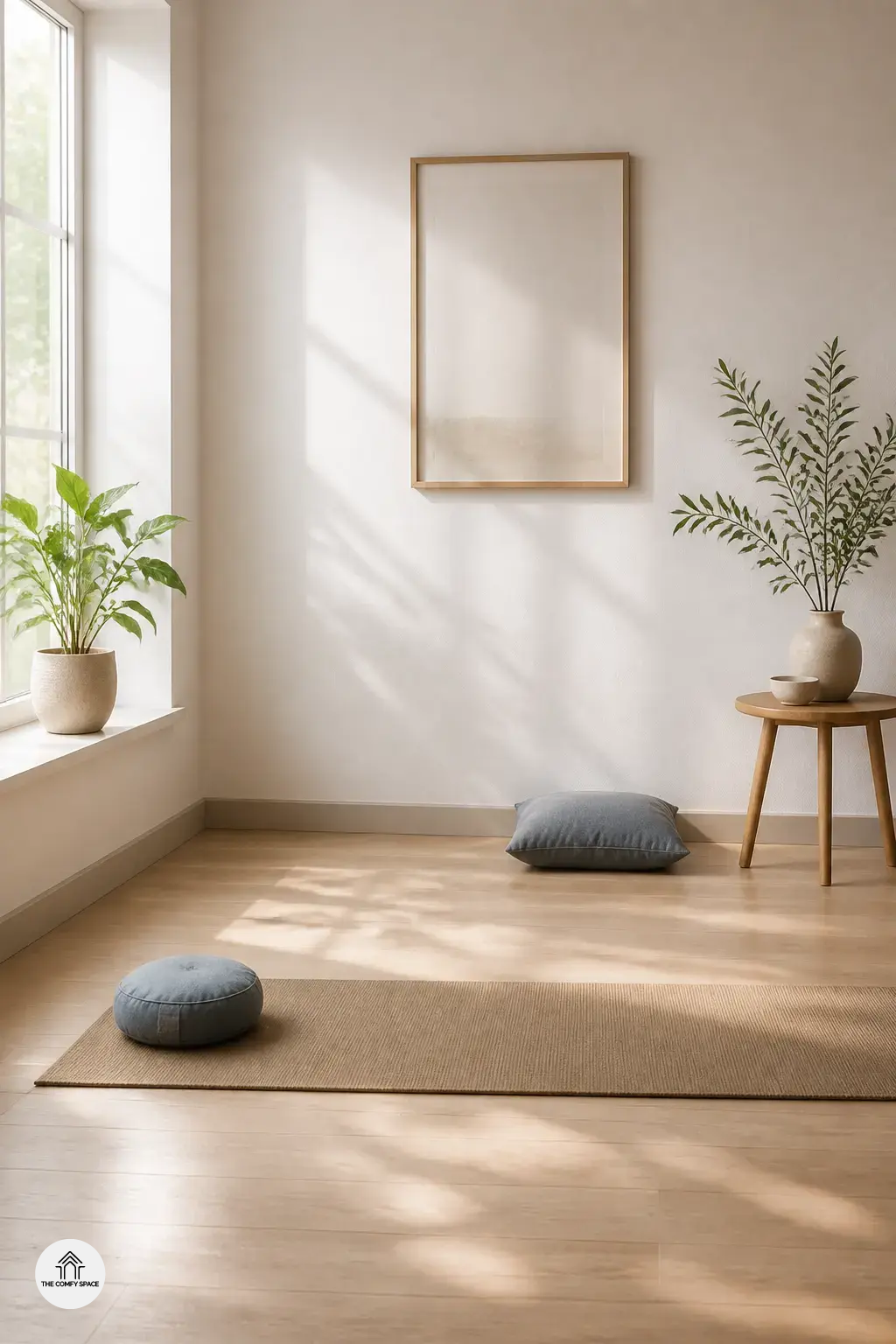
Start with the basics and let the room breathe. A good yoga mat, a cushion, and maybe a blanket or block are usually enough to make your space feel calm instead of cluttered. I learned that the hard way after leaving every prop out on display. Suddenly, my “peaceful corner” looked like a very confused gym class. As interior designer Kelly Wearstler says, “The key to good design is editing.”
- Keep extra gear in a basket or on one small shelf.
- Choose simple, neutral pieces that do the job quietly.
- Shop smart at familiar stores like IKEA or Target, then stop before the cart gets emotional.
Add Decor That Feels Intentional, Not Busy
Add decor that feels intentional, not busy, so your yoga corner stays calm instead of turning into a random storage shelf. I learned this the hard way after one trip to a familiar home store turned into “just one more candle” chaos. A better move is to pick one or two meaningful pieces, like a tiny plant or a simple wall print, and stop there.
- Avoid filling every surface; empty space is part of the minimalist charm.
- One natural texture, like wood, linen, or woven fiber, adds warmth without visual noise.
“A room breathes when you let it have space,” says interior designer Maya Lee.
That little breathing room makes your practice feel lighter, which is the whole point.
Keep the Atmosphere Soft and Sensory-Friendly
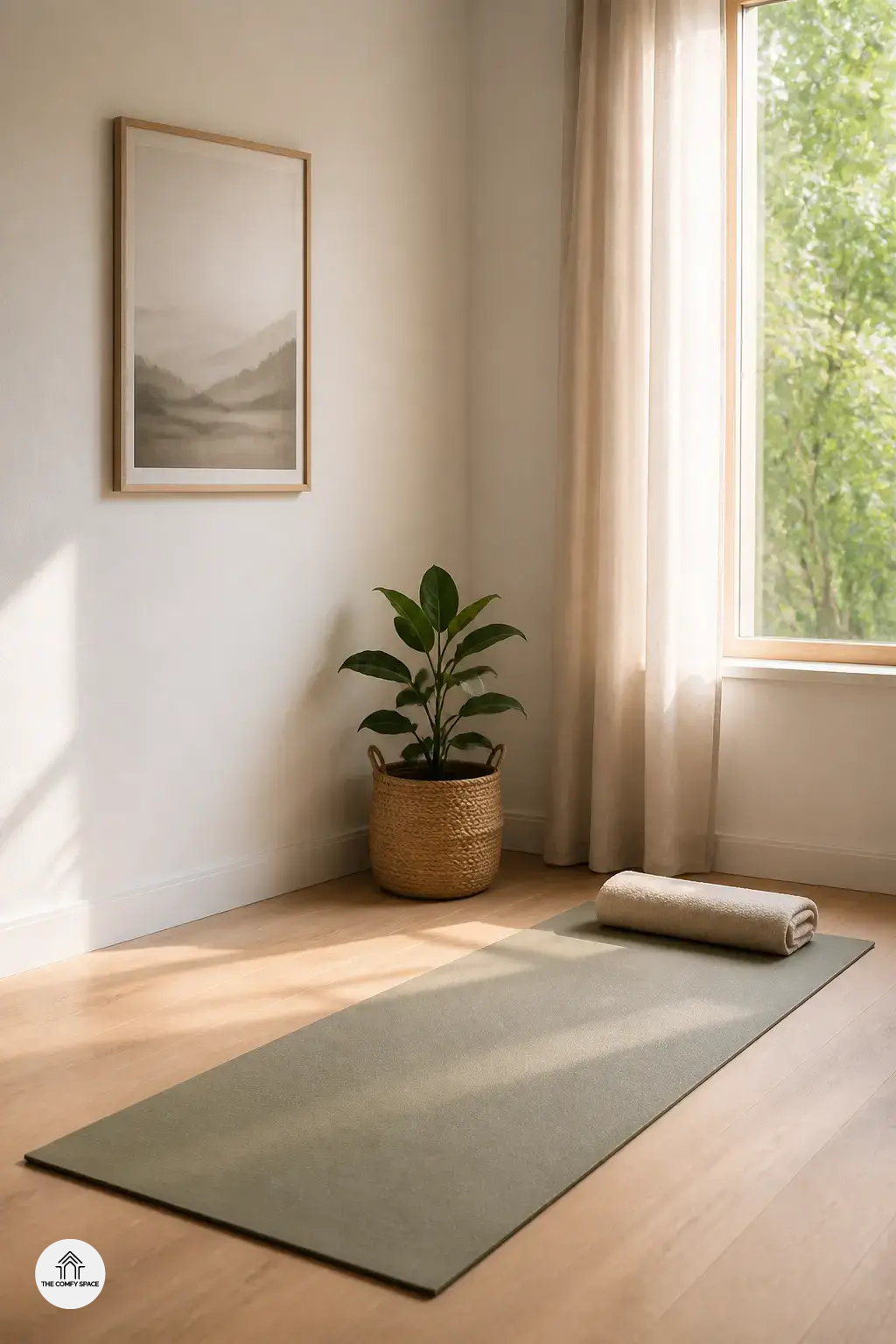
Keeping the atmosphere soft and sensory-friendly makes a yoga corner feel like a real reset button, not a fancy display. I once bought a bright lamp from a big-box store and instantly regretted it. Way too harsh. Swap that for gentle lighting, like a floor lamp, soft bulbs, or even candlelight for evening practice. As designer Nate Berkus says,
“Your home should tell the story of who you are.”
To keep things fresh, try a small fan, an open window, or a calming scent. It sounds simple, but these tiny choices matter when the day has already felt noisy. The goal is to create a room that helps you breathe easier, not one that feels like a showroom. A few soft textures and fewer shiny distractions can do wonders. Honestly, less clutter usually means less mental drama too.