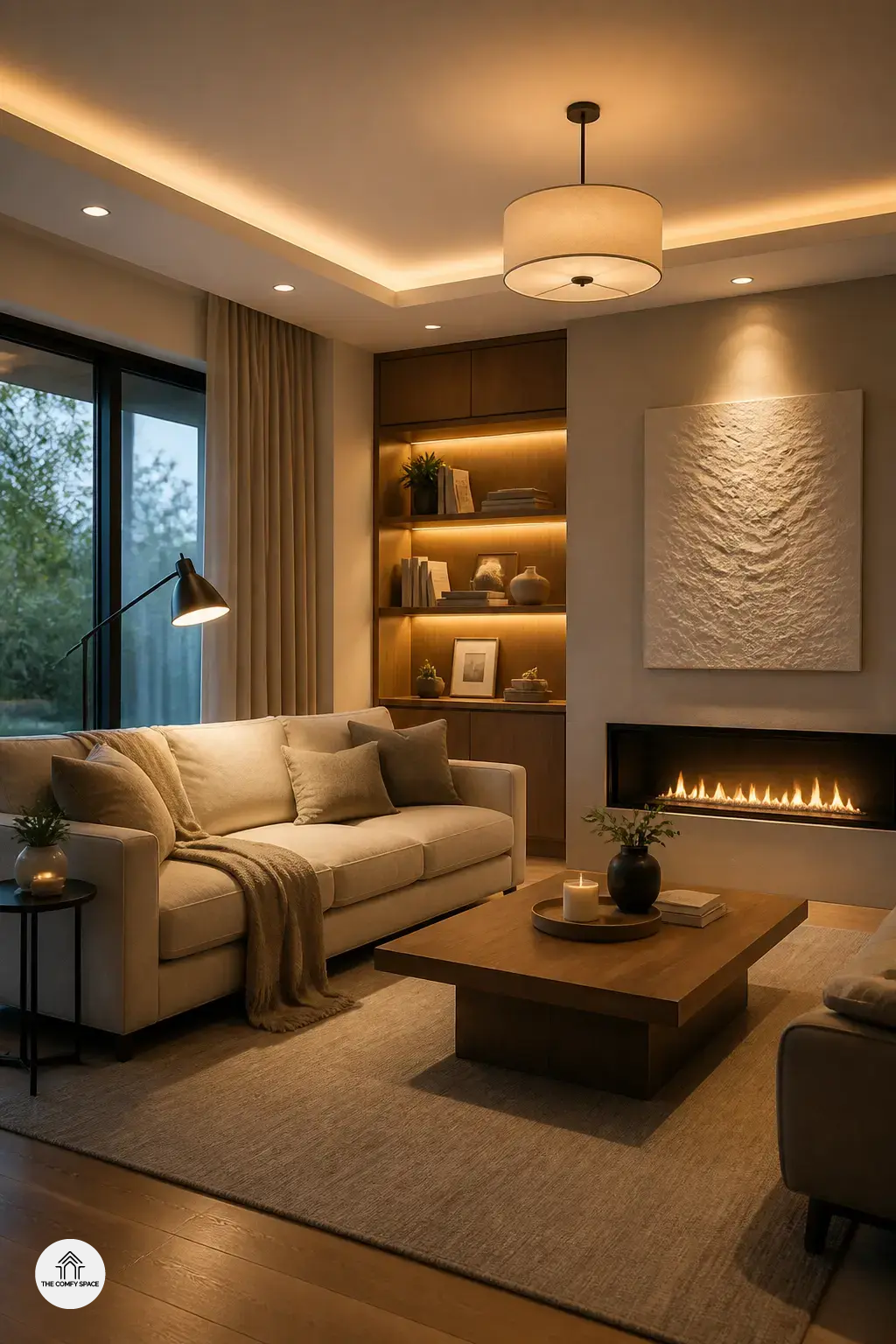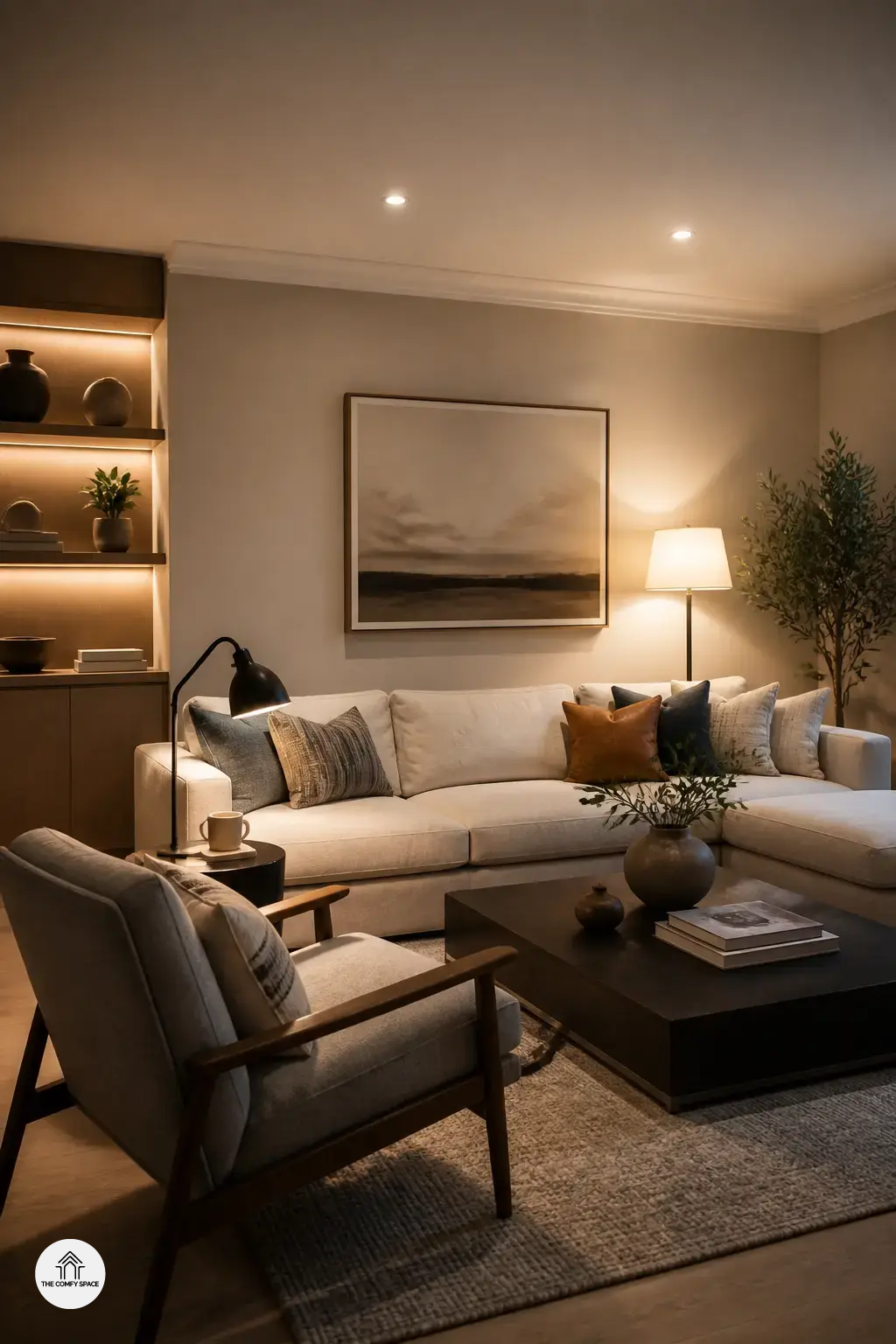
Layered lighting is what makes a home feel warm, lived-in, and actually useful. One ceiling light can leave a room looking flat and a little sad, like it forgot to try. When you mix ambient, task, and accent lighting, you add comfort, depth, and flexibility. That means your living room can handle reading, movie night, and last-minute guests without a meltdown. “Good lighting changes how a room feels before you even notice why,” interior designer Sarah Collins says.
I once thought a room looked perfect in daylight, then night came and it turned into a shadowy cave. Classic mistake. A lamp by the sofa, under-cabinet lights in the kitchen, and a small accent light on a shelf can fix that fast. Think of it like shopping at Target: one item is fine, but the right mix makes everything work better together.
Understanding Ambient Lighting as Your Base Layer
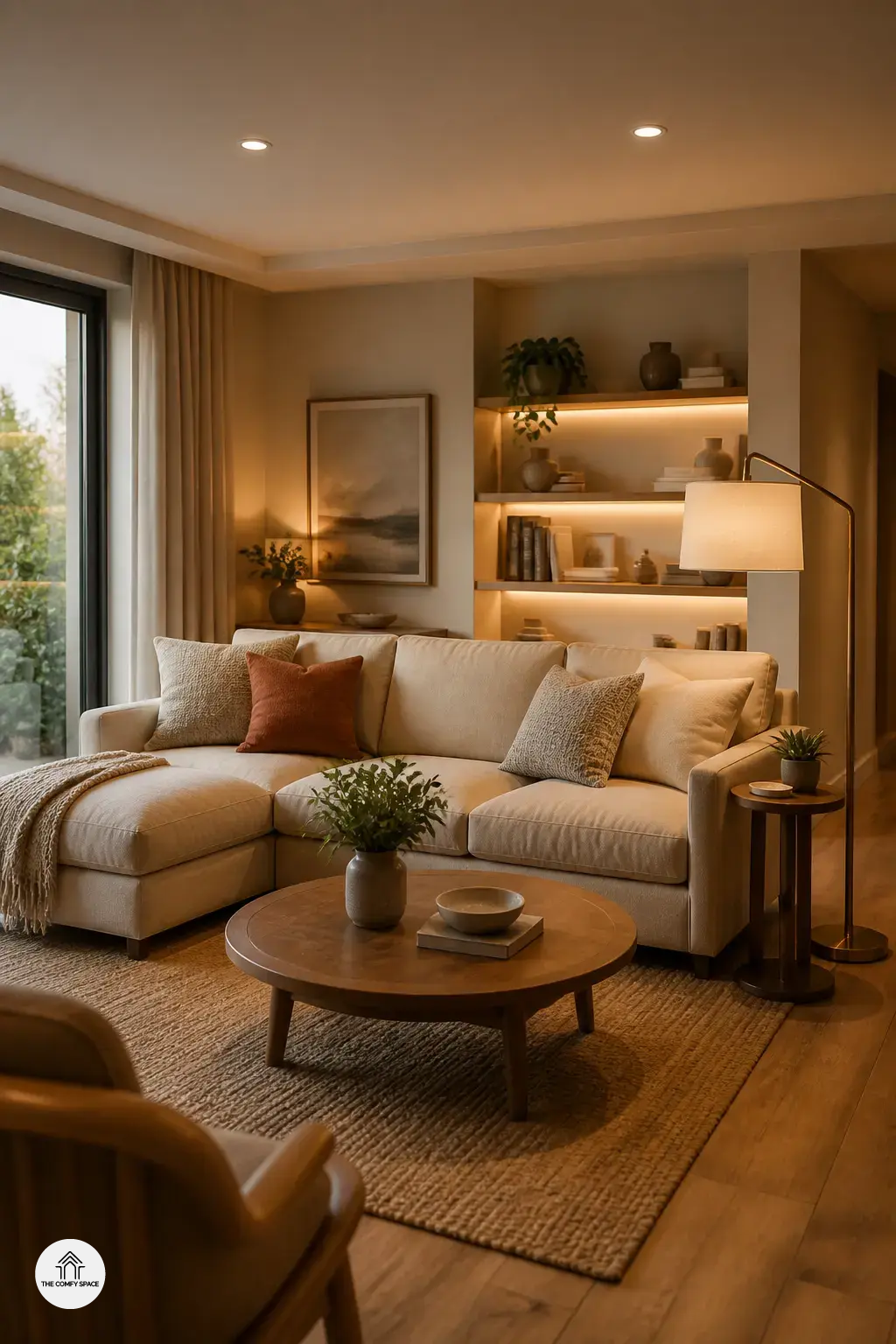
Ambient lighting is your room’s background glow. It sets the mood and keeps you from bumping into the coffee table like I did after a late-night IKEA run. As designer Jane Michaels says,
“Good lighting should disappear into the room, not shout at it.”
Think ceiling fixtures, recessed lights, or soft wall lights that spread a gentle wash across the space.
Keep it even, warm, and easy on the eyes. I learned the hard way that harsh overhead light makes a cozy living room feel like a waiting room. A dimmer is a small upgrade with big payoff. It lets you adjust the light for reading, relaxing, or surviving that one last load of laundry.
How Task Lighting Makes Life Easier
Task lighting is the little hero that saves your eyes when you’re reading in bed, chopping onions, or trying to find that one sock at 7 a.m. It’s focused light made for specific jobs, and it makes everyday life feel a lot smoother. I once grabbed a lamp at IKEA that looked cute but was way too dim. Instant regret. For better results, choose desk lamps, under-cabinet lights, or vanity lights that match the task, not just the style.
“Good task lighting should make the job feel easier, not make you squint like you’re solving a mystery,” lighting designer Sarah Mills says.
When shopping at Home Depot or any big store, test brightness before you buy. Warm but clear light works well for grooming, while stronger light helps in kitchens and workspaces. The goal is simple: light the exact spot you need, and let the rest of the room stay calm.
Using Accent Lighting to Add Personality
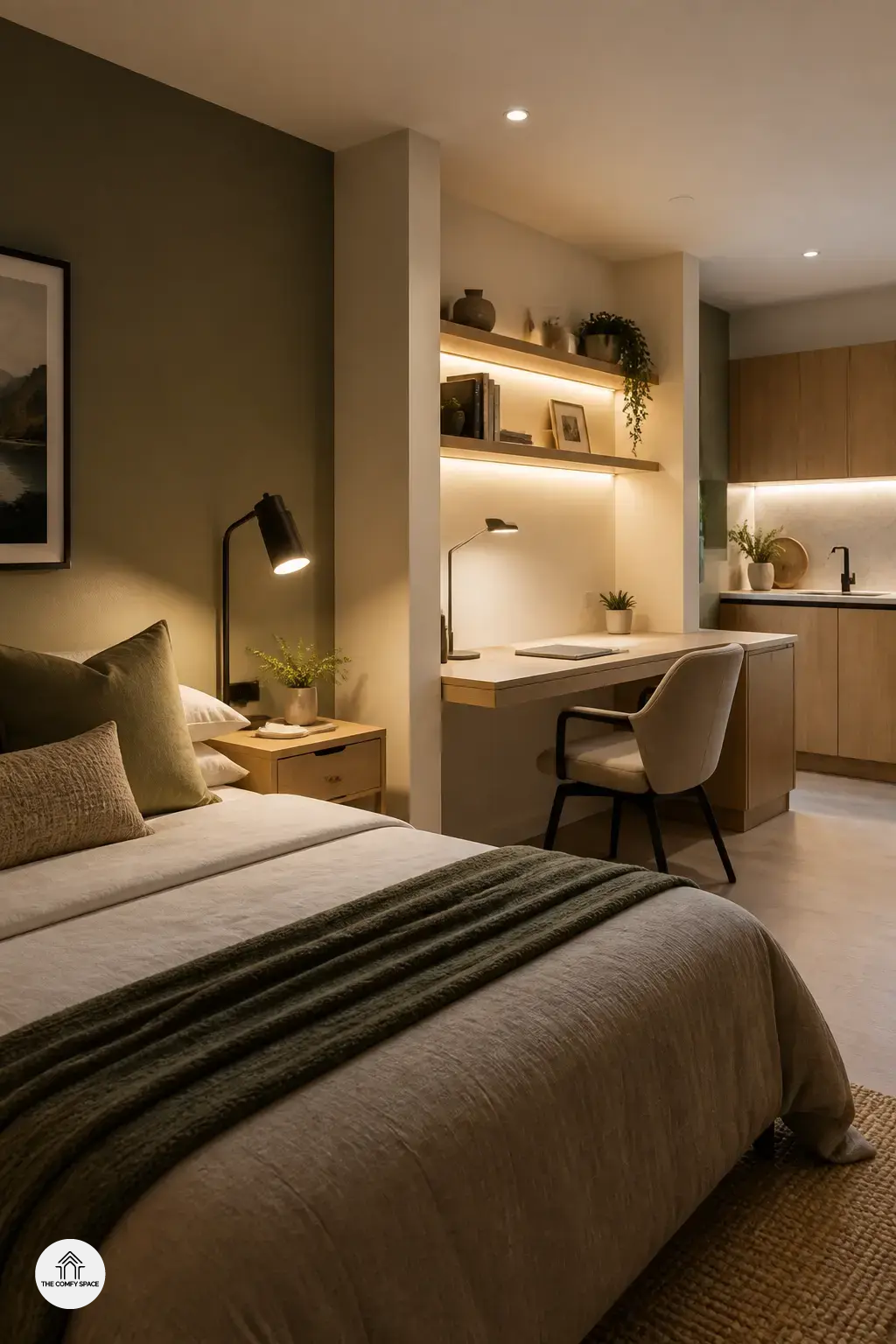
Accent lighting is the little trick that makes a room feel like it finally got dressed. It can highlight art, shelves, wood textures, or a pretty archway you almost forgot about. I once bought the wrong lamp at IKEA and ended up washing out the wall art—lesson learned. As designer Kelly Wearstler says, “Lighting is the jewelry of a room.” And honestly, she’s right. A small spotlight or picture light can add drama without buying a pile of new decor.
Use accent light to guide the eye and make the space feel finished. Try placing it near a bookshelf, a plant, or a favorite object from that random home store haul you swore you didn’t need. The goal is simple: create little moments of glow. That’s what makes a room feel intentional, cozy, and a bit more magical.
The Best Way to Mix the Three Lighting Layers
Mixing ambient, task, and accent lighting is a little like making a good playlist. If one thing is too loud, the whole vibe gets weird. In my own living room, I once relied on one sad ceiling light and wondered why the space felt flat. Big mistake. Start with soft ambient light, then add focused task lighting where you actually read, cook, or work.
- Balance all three layers so no single light source does all the work.
- Dim or brighten each fixture until the room feels easy on the eyes.
- Test everything at night, because lighting always tells the truth after sunset.
“A room should glow, not glare,” interior designer Sarah Collins says.
That’s the trick. Walk around like you’re shopping at IKEA after a long day and notice what feels cozy, what feels harsh, and what needs a little spotlight love.
Common Layered Lighting Mistakes to Avoid
One of the biggest layered lighting mistakes is trusting one lonely ceiling fixture to do all the work. I’ve done it, and yes, the room looked flat and a little sad. A better plan is to mix ambient, task, and accent light so the space feels cozy and useful. As lighting designer Sally Store says, “good light should feel invisible, not bossy.”
Also, don’t go too bright. If your living room starts feeling like a dentist office, you’ve gone too far. Warm bulbs usually win here. And please, avoid cheap bulbs or random mismatched fixtures from different stores unless you want the whole design to look confused. A little planning saves a lot of regret.
Easy Layered Lighting Ideas for Every Room
Layered lighting is the secret sauce that makes a room feel finished instead of accidentally gloomy. In the living room, start with warm ambient light, then add a reading lamp and one cheeky accent light on art or shelves. Kitchens need bright task lighting, while bedrooms love soft, cozy layers. Bathrooms can be tricky too, especially when you’re squinting at your reflection like it owes you money.
If you’re unsure where to begin, start small. Add lamps, dimmers, and a few well-placed accent lights from stores you already know, like IKEA or Home Depot. “Good lighting should work with your life, not against it,” interior designer Sarah Collins says. I’ve made the mistake of buying one giant overhead fixture and calling it a day. Spoiler: it was not a vibe. Keep testing, adjusting, and laughing through it—great lighting is all about mood, function, and a little trial and error.