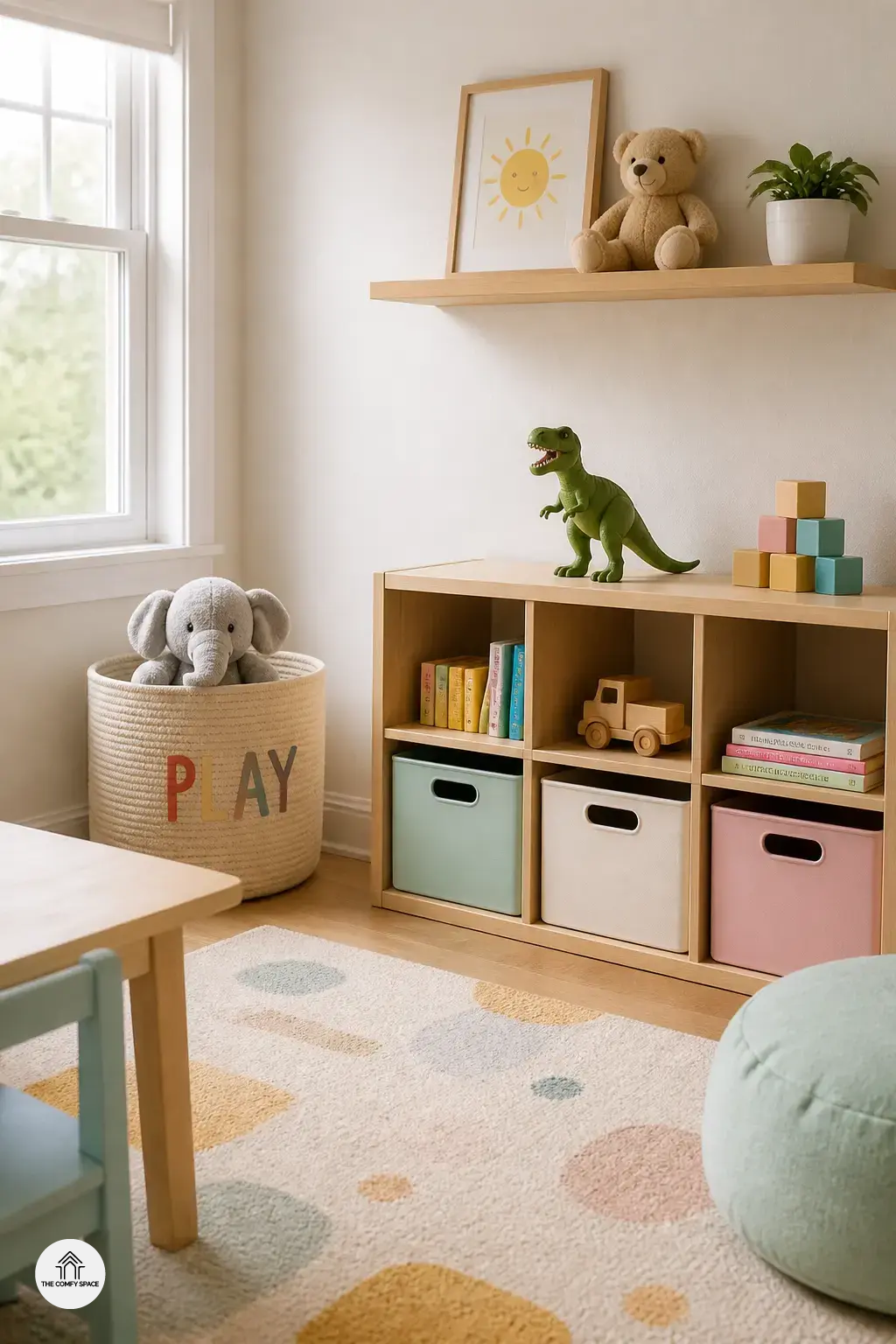
Start with a calm, kid-friendly reset. I learned the hard way that “let’s clean up now” right after snack time usually ends in tears and Lego ambushes. Pick a relaxed moment, maybe after a cartoon or before dinner, and spread everything out so the mess is clear. That way, you can spot the toys your child actually loves instead of stuffing random bits into a bin from Target and hoping for the best.
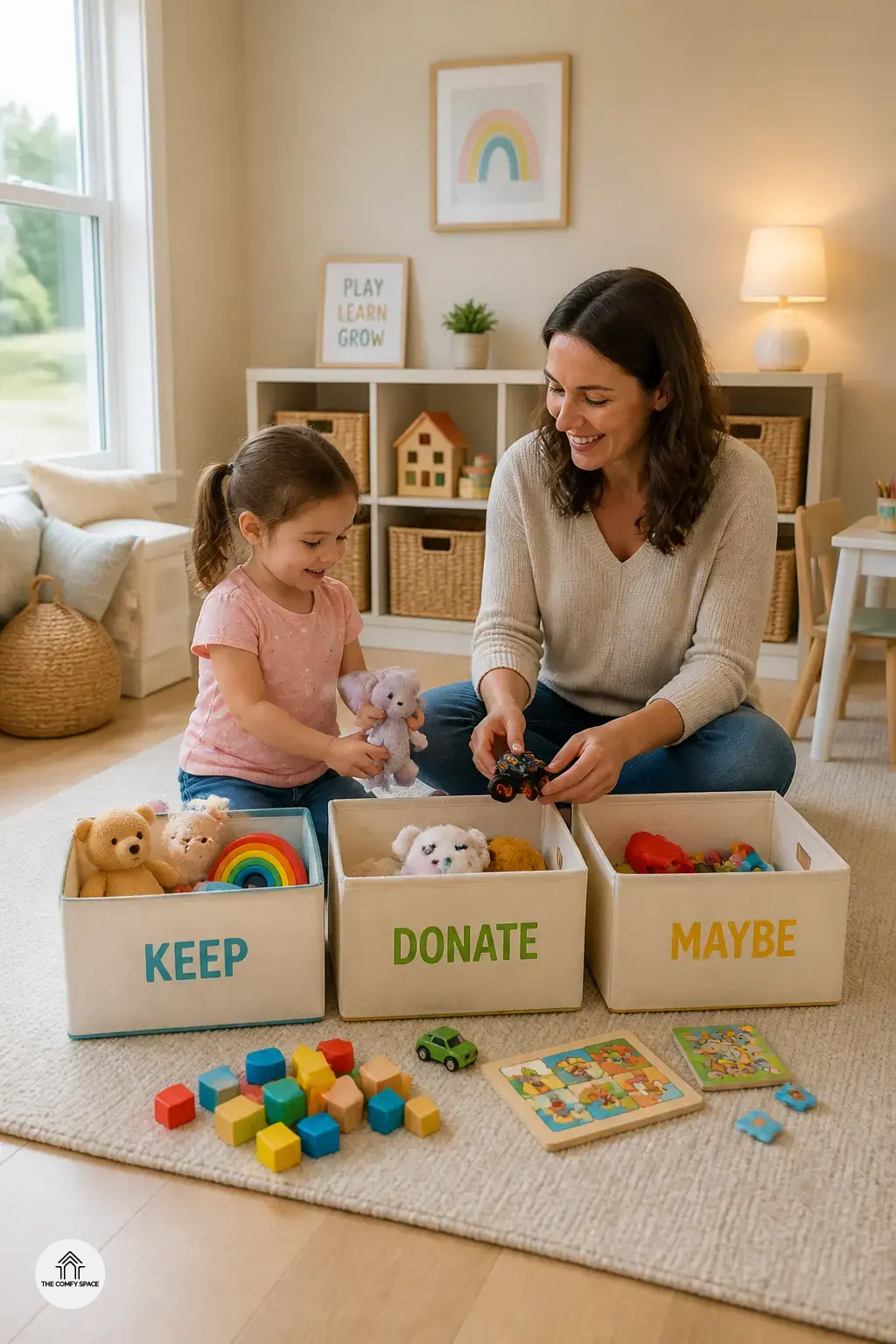
Keep the vibe light and make it a team effort. “Kids cooperate more when they feel included, not controlled,” says child organizer Dana Brooks. Let them help sort favorites into keep, donate, and maybe piles. A little humor goes a long way when you find three missing toy cars under the sofa. And yes, mistakes happen. I once tossed the wrong puzzle piece set and learned to label every box after that.
Sort Toys Into Keep, Store, and Donate
Sorting toys into keep, store, and donate piles makes the whole job feel way less scary. I once tried to “just tidy up” and ended up with one giant floor mountain of LEGO and mystery parts from Target. Big mistake. Three piles keep things simple, and kids can help without getting overwhelmed.
Keep the toys they actually use and love. Store seasonal or sentimental items in labeled bins. Donate the duplicates, broken stuff, and the toys that have been ignored for months. As Marie Kondo says, “Keep only those things that speak to the heart.” That little rule saves time, space, and a lot of toy chaos.
Use Smart Storage That Kids Can Actually Use
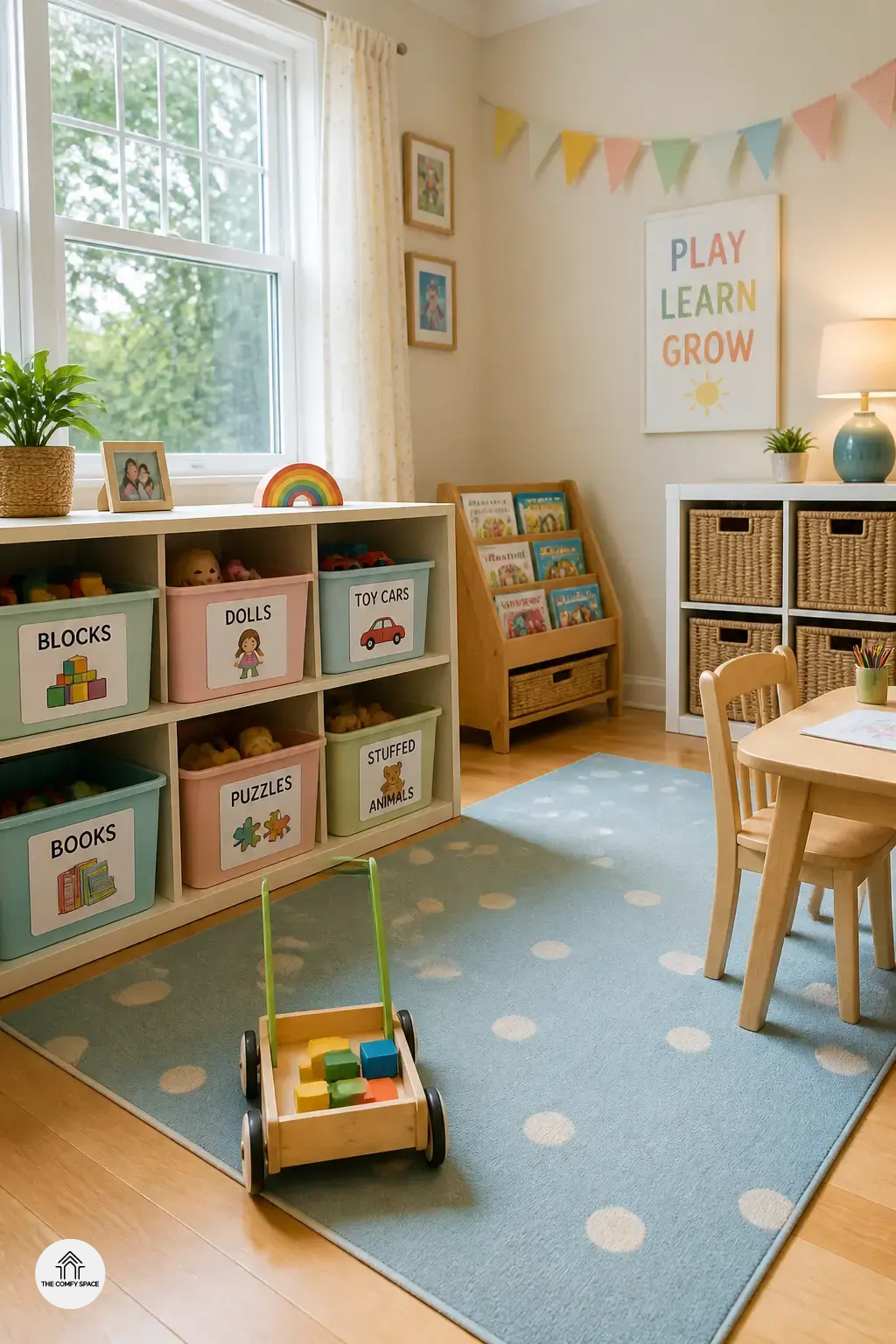
Use smart storage that kids can actually use, because the best system is the one they’ll follow without a five-minute lecture. I learned this after buying cute closed baskets that looked amazing at the store and became toy tombs at home. Open bins and low shelves make cleanup feel easy, not like a puzzle. A simple rule from organization pro Marie Kondo is, “Keep only what sparks joy.” In a playroom, that can mean making favorite toys easy to see and reach.
Try this:
- Choose open bins for blocks, dolls, and cars.
- Use labels with words or pictures.
- Don’t overstuff storage, or you’ll get a tiny toy avalanche.
It’s a small change, but it saves sanity, especially when the room starts looking like a toy store exploded before dinner.
Rotate Toys Instead of Keeping Everything Out
One of the easiest ways to declutter a kids’ play area is to stop pretending every toy needs to live on the floor at once. Store some toys away and bring them back later for a fresh feel. I learned this after buying yet another plastic bin from Target and realizing the real problem was not storage, but overload. Fewer visible toys often means deeper play and less chaos, which is a win for everyone except the toy tornado.
Try rotating toys by season, interest, or whatever is currently being ignored under the sofa. As designer Emily Henderson says,
“A little edit can make a room feel calmer and more intentional.”
Keep a simple system, like one basket for cars, one for puzzles, and one “vacation” box for the rest. When the toys come back out, they feel new again, and your child gets that magical “wow” moment without a full shopping trip.
Create Zones for Different Types of Play
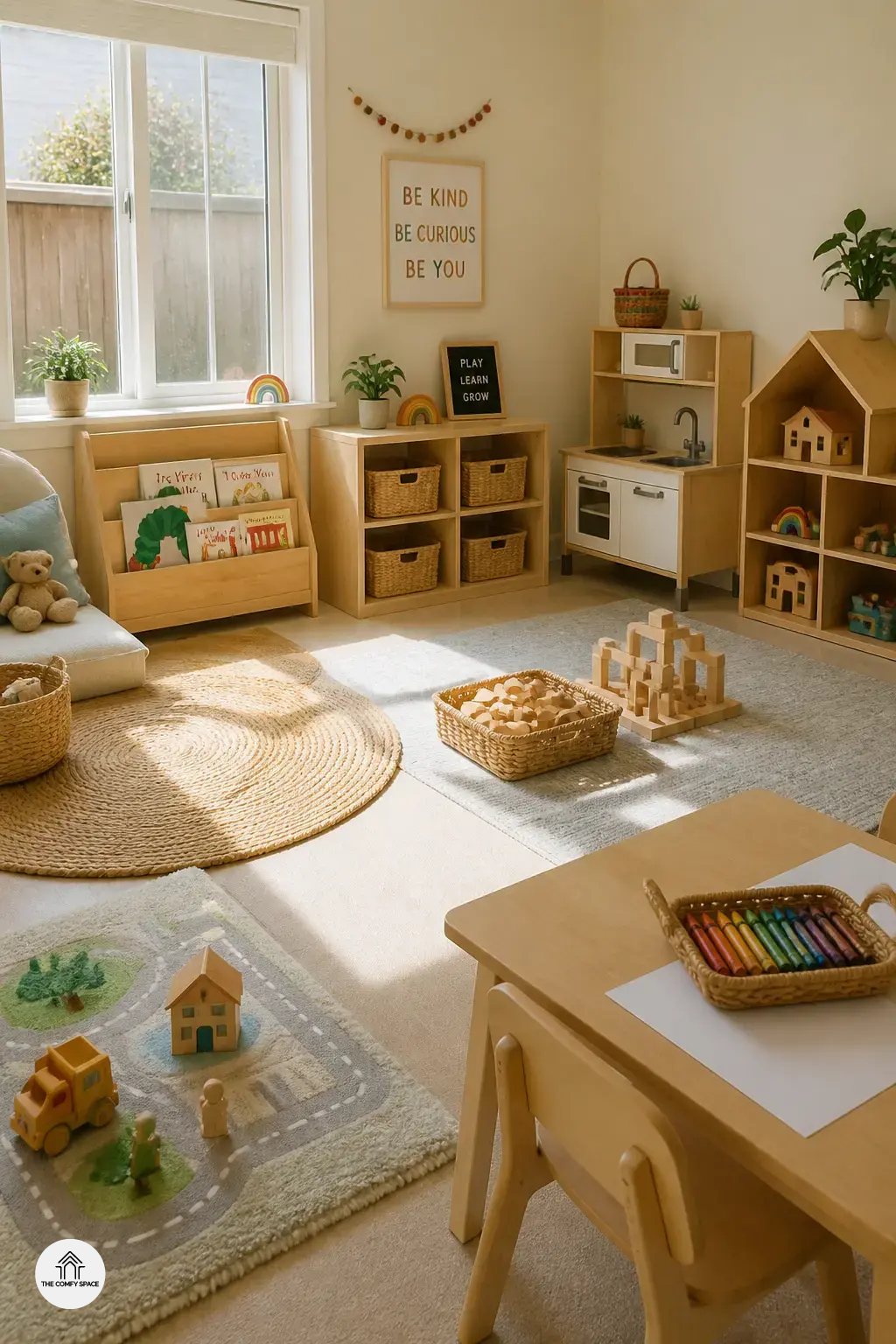
Creating zones for different types of play is one of those “why didn’t I do this sooner?” fixes. I used to dump everything into one giant toy bin, and somehow the puzzle pieces still vanished like socks in the laundry. Then I tried small areas for reading, building, pretend play, and art. Suddenly, the room felt calmer, and my kids actually knew where to go. “Kids do better when the space gives them gentle clues,” says interior designer Maya Lee.
Use rugs, baskets, or low shelves to separate each zone without making it feel like a museum. Keep it simple. A basket for blocks, a soft rug for books, a little tray for crayons. That way, cleanup is faster, and your kids are less likely to dig like tiny archaeologists at the back of a toy store. I’ve learned the hard way that too many bins from the same store just create more chaos, not less.
Make Cleanup a Habit, Not a Big Event
Make cleanup feel like a tiny daily habit, not a dreaded weekend disaster. I learned that the hard way after one too many “toy avalanches” in the living room. A 5-minute reset after playtime works better than a full-blown purge later. Try this:
- Pick up the obvious clutter first.
- Sort only the toys your child actually uses.
- Keep favorites in easy-to-reach bins.
As “Maya Jensen, organizing coach” says,
“Small routines beat giant cleanup battles every time.”
Turn it into a game with music, a timer, or a silly race. Expect protest, because kids can treat a broken crayon like treasure from a royal vault. Stick with it. It gets easier.
Keep Favorites Safe While Reducing the Clutter
Decluttering a kids’ play area can feel like trying to tidy a toy store after a birthday party. The trick is to keep the favorites safe while letting the rest breathe a little. I once tossed a “mystery pile” into a donation bag and found the missing dinosaur three days later. Oops. Try this instead:
- Create a special spot for prized toys so they never get mixed into the donation pile.
- Let your child help choose which favorites stay on display.
- Use a small bin or shelf for the toys they actually play with most.
“Decluttering is not about having less love, just less floor coverage,” says home organizer Lena Brooks.
That mindset helps when you’re staring at a sea of blocks from the local store and wondering how it all multiplied overnight.