
Biophilic design feels so timely because life is already loud enough. Bringing nature home softens the edges a little. A few leafy plants, warm wood, and daylight can make a room feel calmer fast. I once bought a cute rug that looked amazing online, but it made the space feel oddly stiff. Lesson learned: nature usually wins. As designer David Pearson says,
“Biophilic design reconnects us with the living world.”
What makes this style so easy to live with is how forgiving it is. You do not need a full makeover from a fancy showroom. Start small with a plant from the grocery store, linen pillows, or a vase of branches. Mix textures and let the light do some work too.
- Use natural materials
- Keep colors soft and earthy
- Add one thing that feels alive
It is simple, calming, and honestly a little addictive.
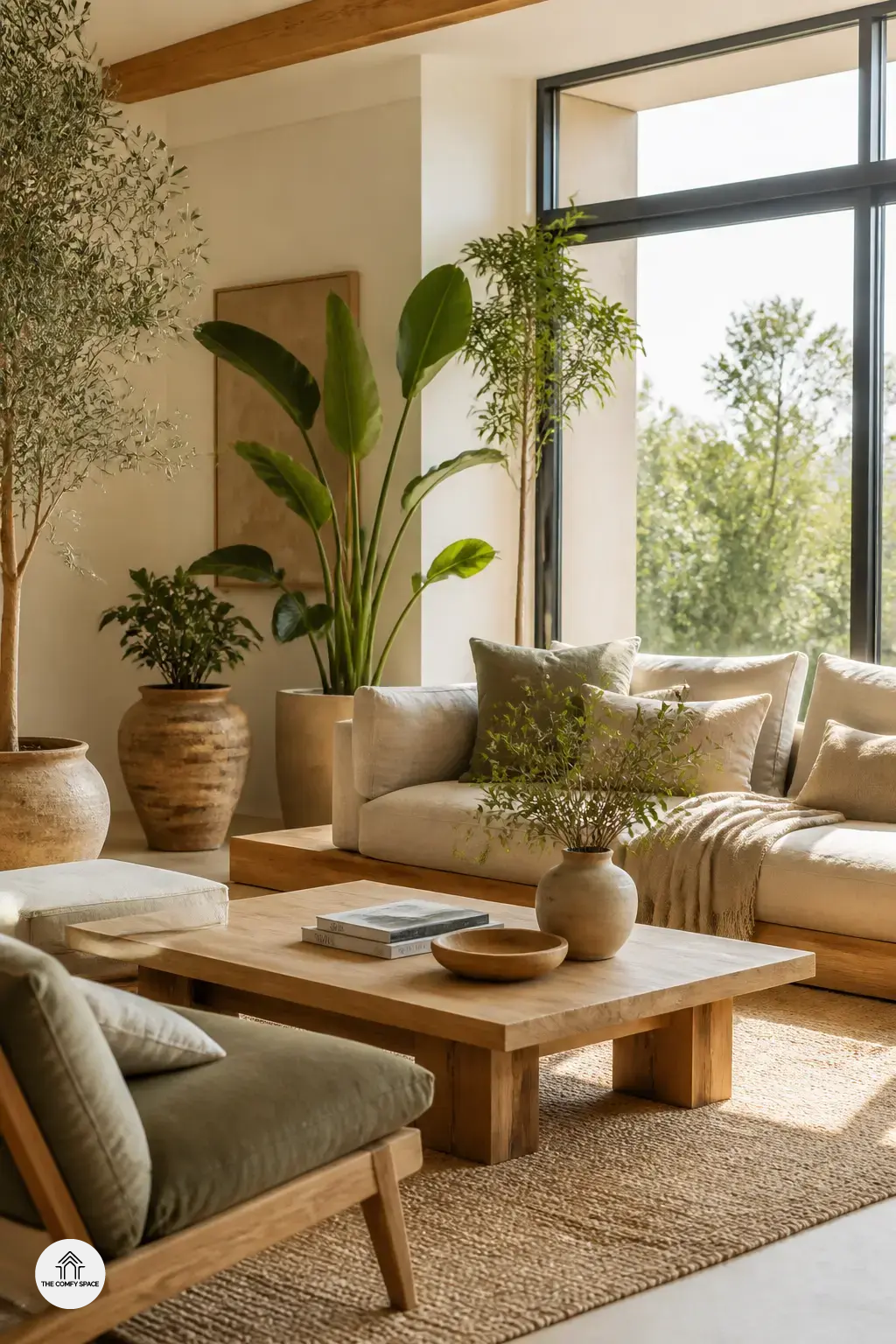
Start With Light, Air, and a Better Flow
Start with light, air, and a better flow, because biophilic design is not just about adding a few plants and calling it a day. It is about letting your home breathe. I once shoved a bulky chair in front of a window from a big-box store, and wow, what a mood killer. Let natural light do the heavy lifting whenever possible. Open layouts, breezy curtains, and better airflow can change the whole vibe fast.
“A room should feel alive, not sealed off,” says interior designer Maya Ellis.
Small planning mistakes are easier to fix than people think. Move furniture away from windows, swap heavy drapes for sheer ones, and notice how everything feels lighter right away.
Use Plants Without Turning Your Home Into a Jungle
Biophilic design does not mean you need to become a full-time plant parent overnight. I learned that the hard way after buying a needy fern that looked gorgeous for exactly three days. Start with low-maintenance plants that match your routine, not your fantasy life. As interior designer Sarah Sherman Samuel says,
“The best design is the one you can actually live with.”
Mix a floor plant, a few shelves, and maybe one hanging pot for a relaxed feel. It keeps the room fresh without turning it into a rainforest. And honestly, even one plant from a familiar local shop can make a space feel more alive. I once grabbed a tiny pothos on a grocery run, and it ended up stealing the show. Small wins, right?
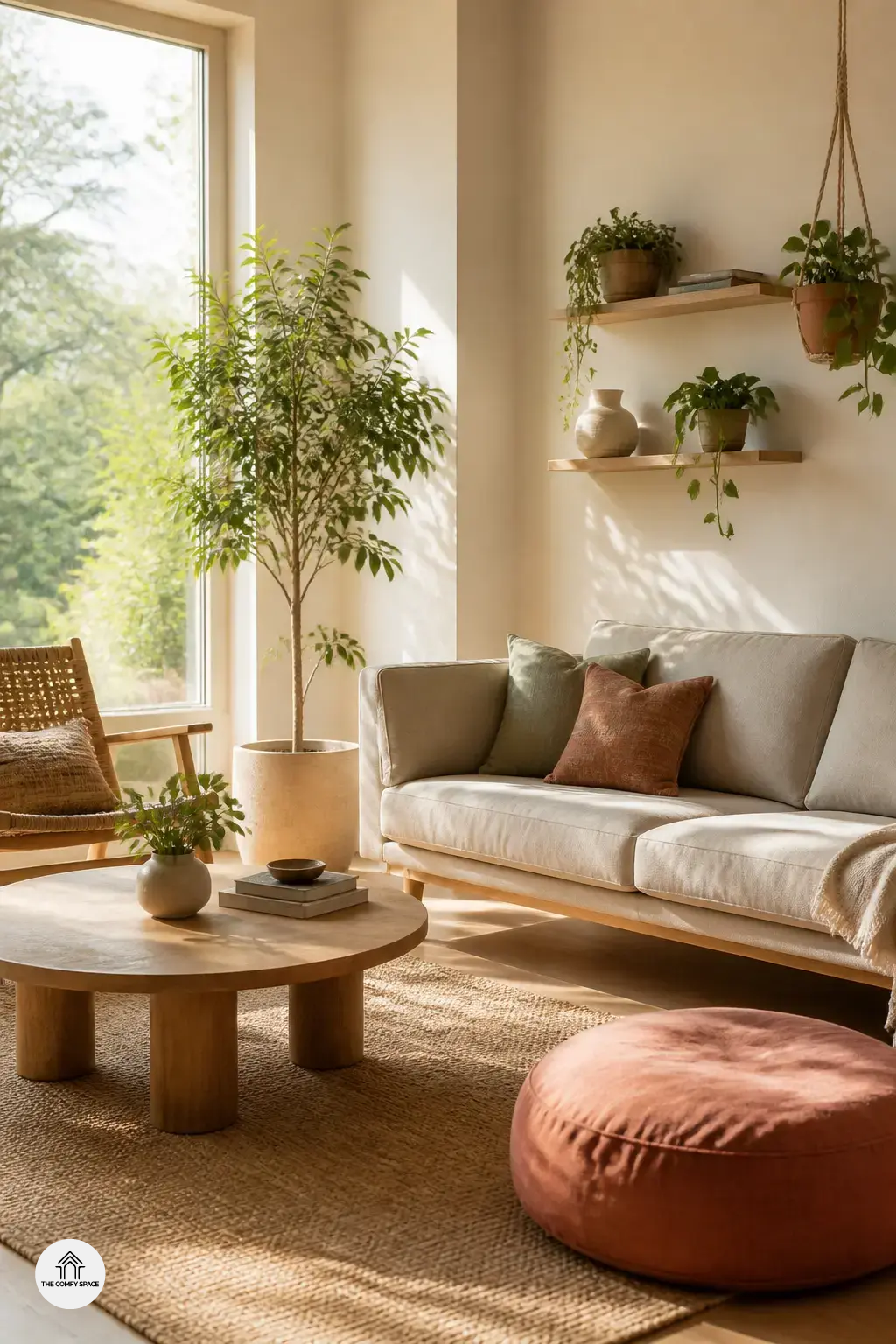
Pick Natural Materials That Feel Good Every Day
Pick materials that make you want to touch them. Wood, stone, rattan, linen, and clay bring in that cozy, lived-in feeling that biophilic design does so well. I once bought a super glossy side table on a big-box run, and it looked great for about five minutes. Then the room felt weirdly cold. “Good design should invite you in, not push you away,” interior designer Sarah Johnson says.
Start small. Swap a shiny tray for a clay bowl. Add a linen throw. Try a rattan chair near a window. A few honest materials often feel better than too many shiny finishes, and many homeowners learn the hard way that fake-looking surfaces can make a room feel flat. Little changes add up fast, and your space starts to breathe.
Bring Nature Into Color, Pattern, and Texture
When I first tried to “go natural” in my living room, I bought one very loud leaf-print pillow and called it a day. Big mistake. Biophilic design works best when it feels lived-in, not like a jungle gift shop. Start with earthy greens, soft browns, sandy neutrals, and muted blues. They make a calm base that feels easy on the eyes after a long day.
Then layer in organic patterns and textures, like woven baskets, linen throws, or a wood-grain side table. “Nature is beautiful because it never tries too hard,” says interior stylist Mara Ellis. Honestly, she’s right. A subtle mix is usually easier to live with than an overdesigned theme that gets tiring fast.
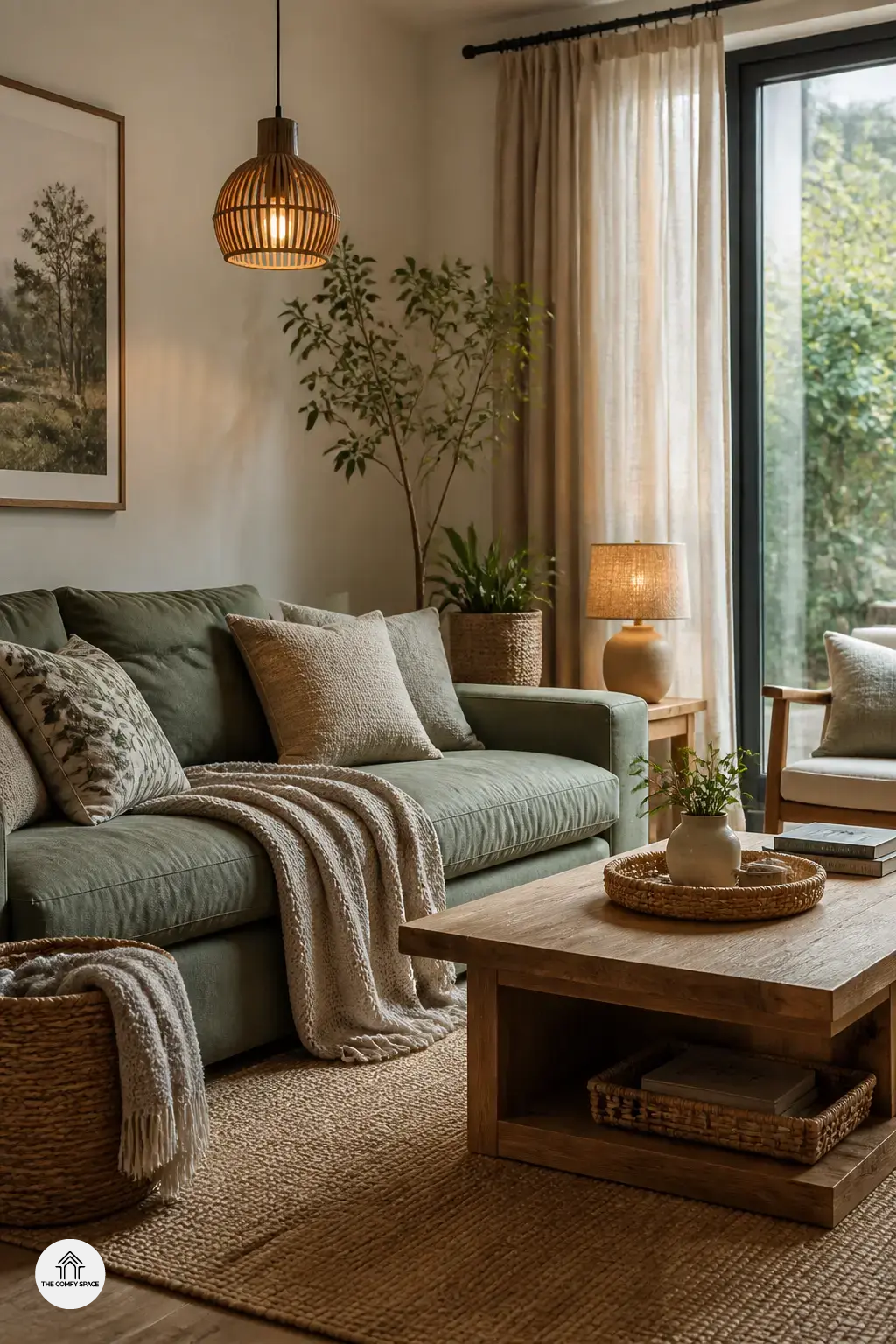
Design Room by Room for Real Life
Biophilic design works best when it fits real life, not some showroom fantasy where nobody spills coffee or leaves a charger on the sofa. I learned that the hard way after buying plants I could barely keep alive. Start with what each room needs. A restful bedroom might want soft linens, dim light, and a leafy corner. A work nook needs daylight and a view, even if it is just a tiny one. A designer friend once told me,
“The best space is the one that quietly helps you breathe.”
For the living room, try natural textures, warm wood, and one bold plant instead of cluttering every shelf. That is usually where things go sideways anyway, especially after a quick trip to Target turns into three candles and a basket you did not need. Keep it simple. The goal is not perfection. It is a home that feels calmer on a normal Tuesday, with a little more comfort and a lot less chaos.